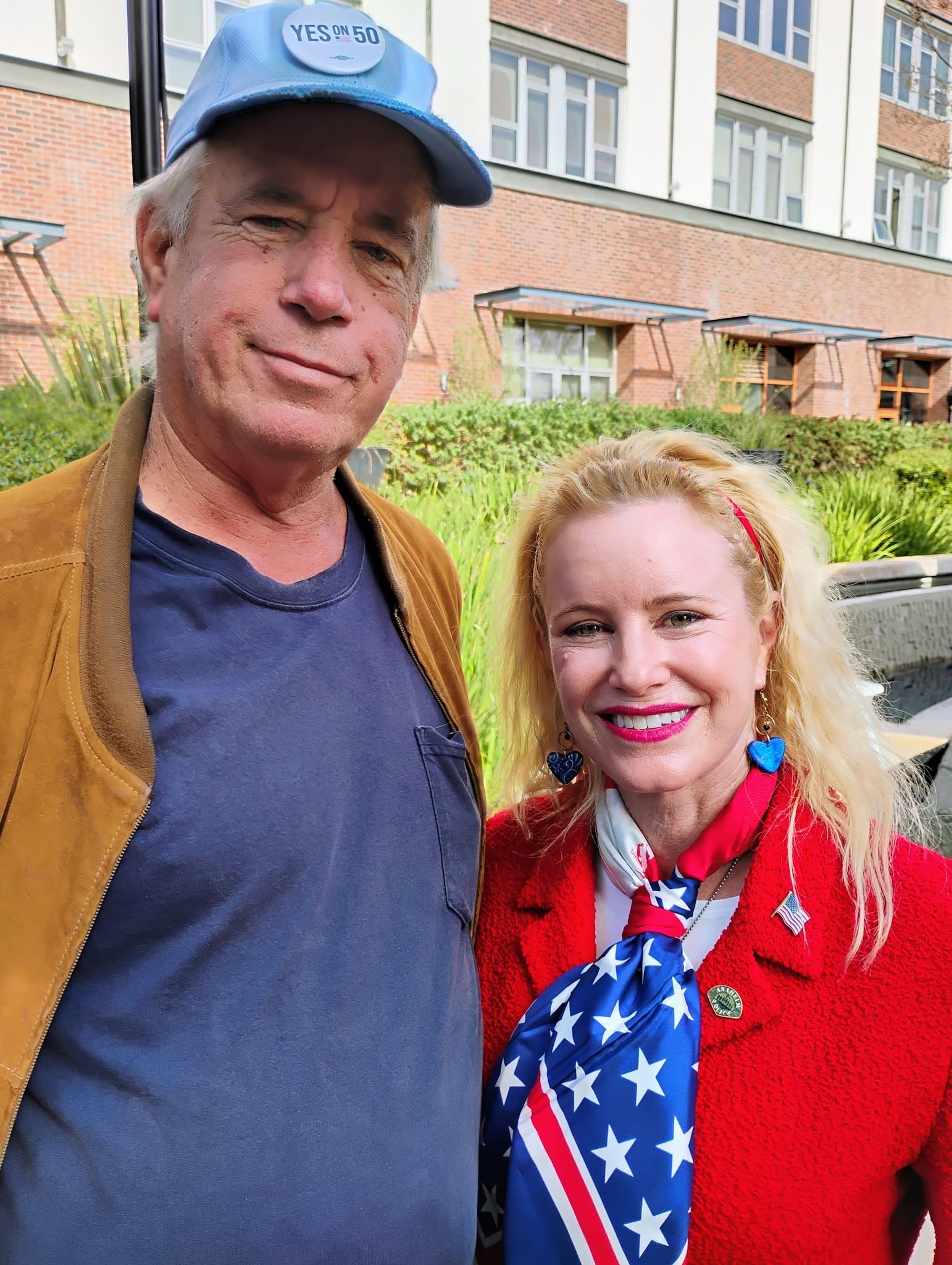
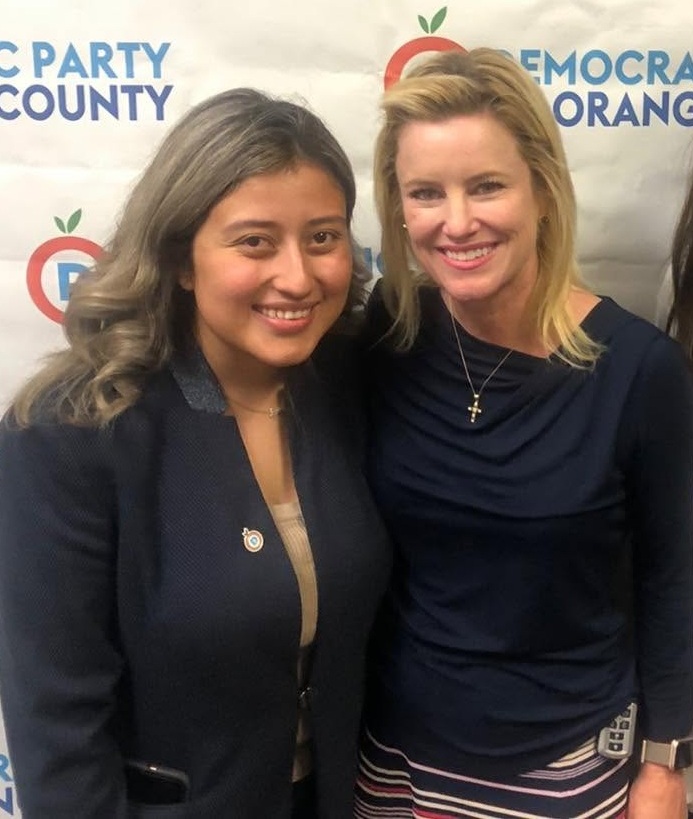
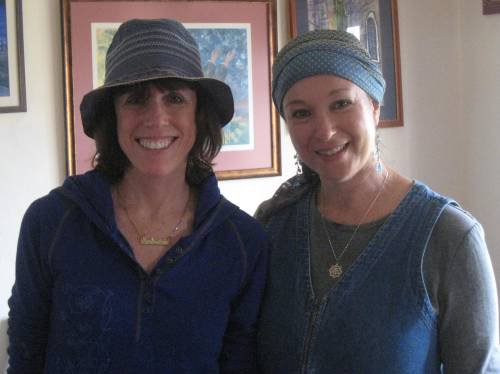
Mark Richard Daniels, a former member of the Cultural & Heritage Commission, with Mayor Ashleigh Aitken in November 2025.
By DUANE J. ROBERTS Editor & Publisher
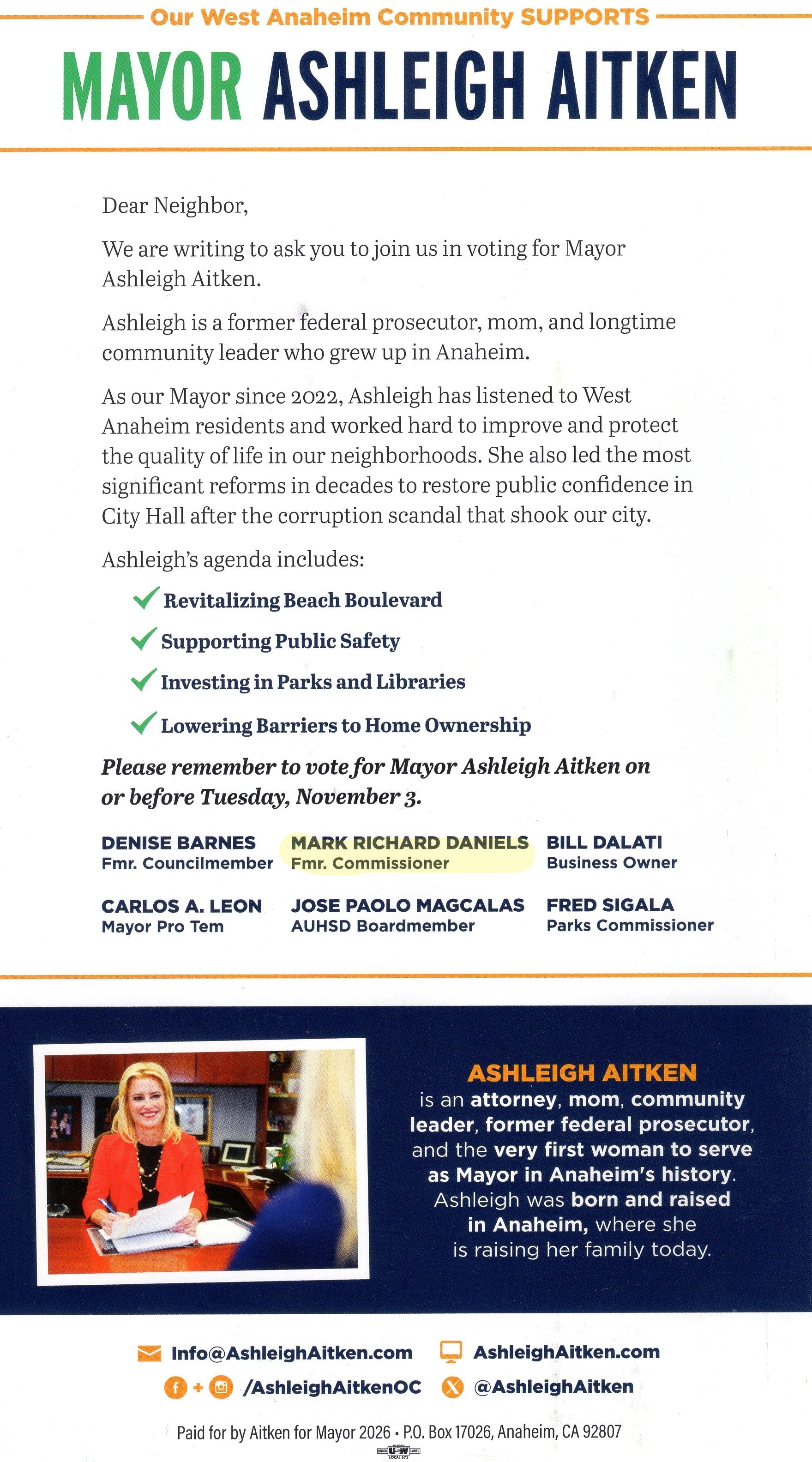
A recent mailer sent to voters in West Anaheim by Mayor Ashleigh Aitken’s reelection campaign highlights as a key endorser a former city commissioner who was forced to step down after making a sexually demeaning remark about a woman with whom he disagreed.
The endorser, Mark Richard Daniels, served on Anaheim’s Cultural & Heritage Commission as an appointee of former Councilwoman Denise Barnes. He resigned in October 2020 after the comment became the subject of intense public scrutiny and controversy.
Daniels’ name highlighted in yellow.
The story about it first appeared in the Anaheim Independent, a right-wing blog run by Matthew Cunningham, a former consultant with the Anaheim Chamber of Commerce. The website has since been rebranded as the Anaheim Observer, although new content is rarely posted.
Despite its political perspective, the central facts of this controversy were never in dispute. The matter focused on Daniels’ own comments, which were documented on video and later acknowledged in the resignation letter he sent to city officials, including Barnes herself.
According to the Independent, Daniels was recorded during an Anaheim Police operation near Beach Boulevard and Ball Road while speaking with homeless advocate R. Joshua Collins. During the conversation, he made disparaging comments about Jodie Mosley, a homeowner.
The most controversial remark reported by the blog was Daniels’ statement that Mosley was “probably blowing every one of those cops.” The comment drew fierce criticism from West Anaheim residents and prompted calls that he be removed from the commission.
This ultimately led to action by Barnes, who was infuriated with her appointee. In a letter, the councilwoman wrote, “I am deeply offended by what Mr. Daniels said. I do not condone that sort of language, in any circumstances.” She further added he was asked to resign.
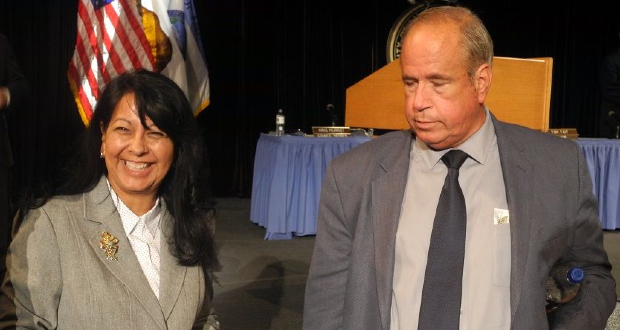
Barnes and Daniels in an undated photo.
Daniels subsequently quit and issued a written apology. “I would like to apologize to Jodie Mosley for the pain I have clearly caused her with my words, which have unfortunately been made public …,” he said. “Mrs. Mosley, I am genuinely sorry, and I humbly ask for your forgiveness.”
Last Friday, the Anaheim Investigator contacted Aitken’s campaign team seeking comment on Daniels’ inclusion as an endorser and whether they considered the circumstances surrounding his 2020 resignation when preparing the mailer. So far, we haven’t received any response back.
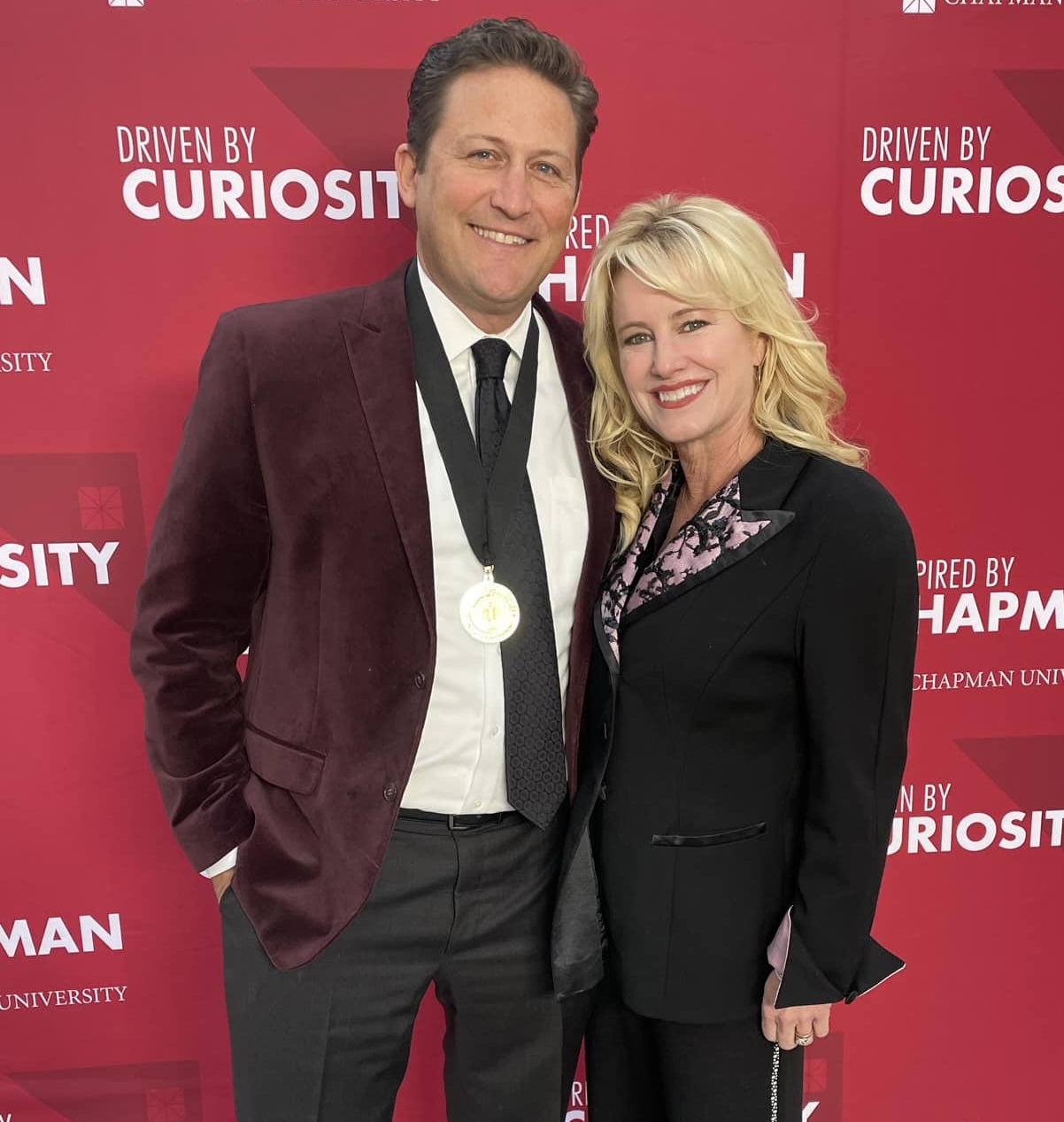
Michael Penn and his wife Mayor Ashleigh Aitken celebrating his appointment as chair of Chapman University’s Board of Governors in February 2023.
By DUANE J. ROBERTS Editor & Publisher
Emails contained within 344 pages of documents on Mayor Ashleigh Aitken’s embassy‑funded trip to Qatar in May 2025—released to The Anaheim Investigator last year through the public records act—appear to support former Chief of Staff Berenice Ballinas’ allegation that Michael Penn, Aitken’s husband, lied about the reason why he traveled with her. Ballinas said Penn’s later claim that he went on behalf of Chapman University—where he serves on an advisory board—conflicted with the contemporaneous communications she handled during the trip.
Public records show the Qatari Embassy invited Aitken and a “guest,” and every email exchanged between the Embassy, Aitken, and Ballinas consistently treated Penn in that capacity without a single deviation. Taken together, these communications create a clear evidentiary trail that contradicts the couple’s retroactive explanation and raises serious questions about whether the mayor and her spouse knowingly violated California’s gift‑law restrictions—exposure that could quickly escalate into criminal charges if the allegation is indeed proven to be true.
Berenice Ballinas with Ashleigh Aitken in 2020.
In a tort claim filed on September 22nd, Ballinas stated she explicitly warned both Aitken and the Embassy that Penn could not legally accept the trip’s expenses as a “gift” under state law and would be required to reimburse every dollar. She asserted that his airfare, lodging, meals, transportation, and other costs had to be paid separately. Emails reviewed by The Investigator mirror her account, showing the mayor’s husband was treated solely as her “guest” and that he was expected to pay his own way during the entire trip, without exception.
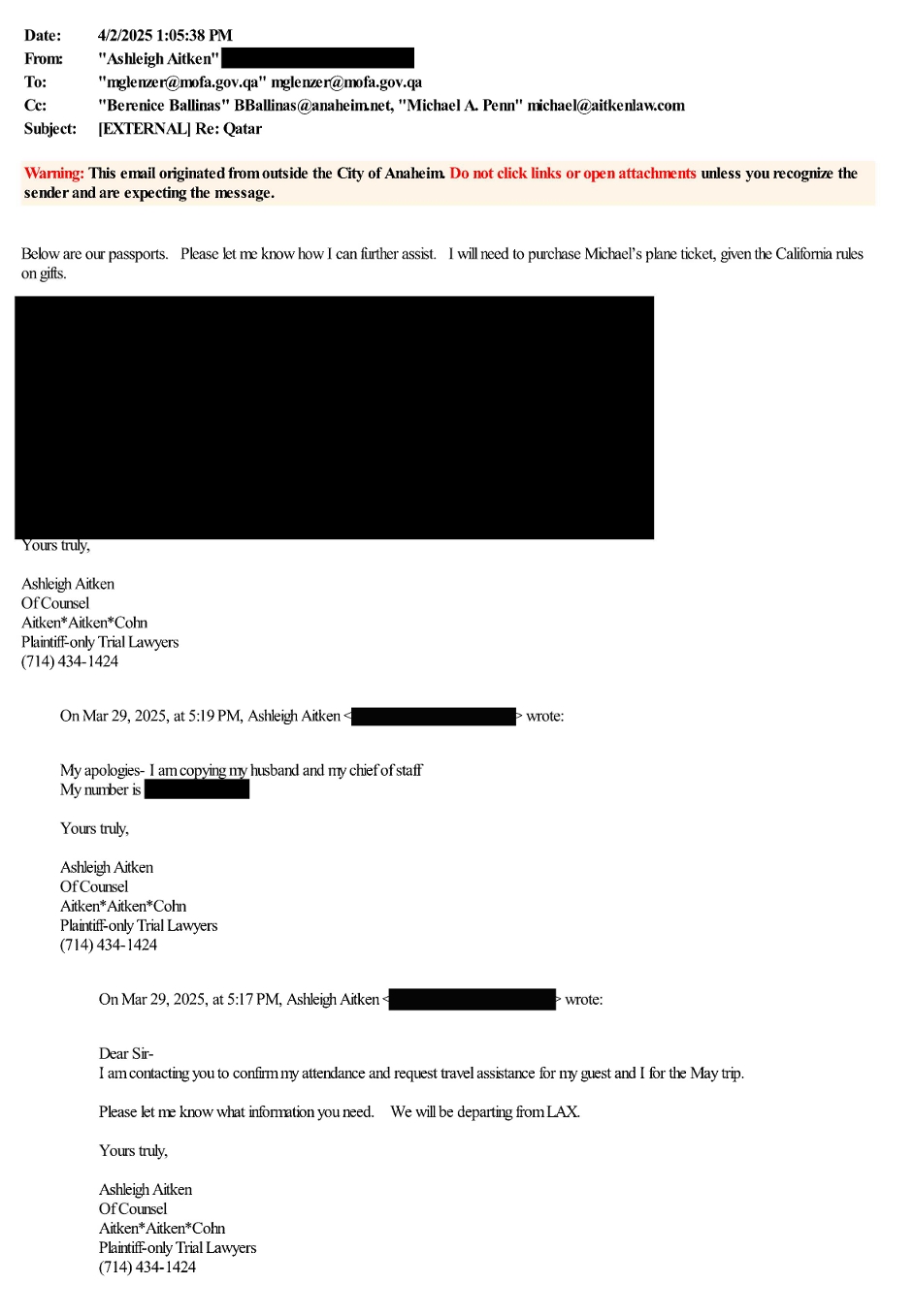
In messages exchanged with the Embassy, Aitken herself not only refers to Penn as “my guest,” but she acknowledges that state law bars him from accepting any of the trip’s financial benefits. “I will need to purchase Michael’s plane ticket, given the California rules on gifts,” the mayor typed in an email dated April 2, 2025. Copies of airline tickets purchased by the Embassy through a travel agency show the couple flew together on the same flights both to and from Qatar, establishing that the mayor’s husband was following her itinerary at every step.
Aitken calling Penn “my guest” and admitting she has to cover his trip.
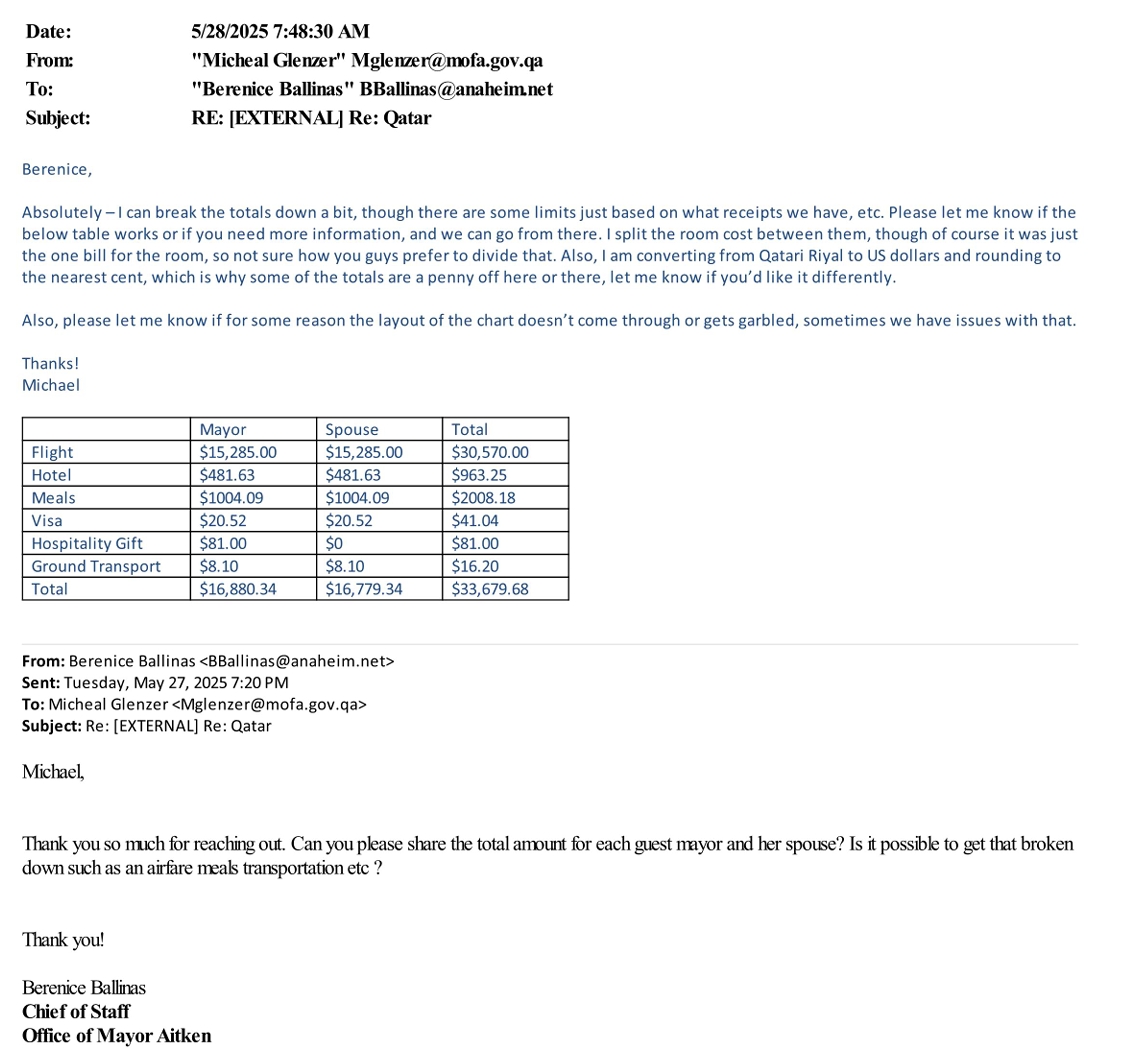
Not long after the couple returned from Qatar, Ballinas obtained an itemized breakdown of the trip from the Embassy. In an email dated May 28, 2025, they estimated that roughly $16,779.34 represented Penn’s portion of the trip’s expenses. Ballinas then reported the matter to Artin Berjikly, ethics officer for the city, and directly texted the mayor about her concerns. According to Ballinas, she responded contemptuously, stating anybody who asked questions could “bite my ass,” a hostile remark that appeared intended to shut down scrutiny.
The issue resurfaced again on July 5, 2025, when a “constituent” filed a public records act request about the Qatar trip. Ballinas said Aitken grew anxious, especially when pressed on whether she reimbursed the Embassy for $16,779.34, a question she appeared eager to avoid. The mayor replied, “It’s none of the City’s business,” and Ballinas believes no reimbursement occurred based on everything she personally observed. She also rejected the claim Penn was “separately invited” because of Chapman University, saying it did not appear in any of the emails.
Qatari Embassy email tabulating Penn’s portion of trip expenses.
Last month, the Los Angeles Times broke a story that Jeanine Robbins, a local resident, filed a complaint against Mayor Ashleigh Aitken with the Fair Political Practices Commission, alleging the mayor failed to disclose that the Qatari Embassy paid for her husband’s travel. Robbins—who had already filed a public records act request asking for documents about this affair on July 8, 2025—said she found no evidence showing that the couple reimbursed the embassy for Penn‘s expenses, raising concerns that Aitken violated California’s gift‑law restrictions.
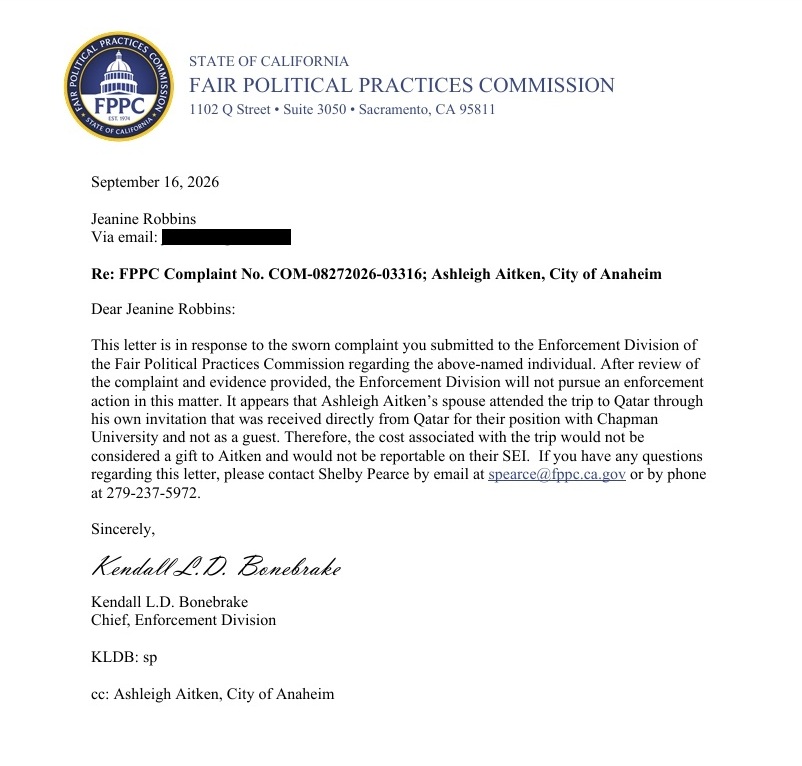
In its coverage, The Times noted the FPPC declined to pursue enforcement, accepting a claim Penn traveled under his own embassy invitation. “It appears that Ashleigh Aitken’s spouse attended the trip to Qatar through his own invitation that was received directly from Qatar for their position with Chapman University and not as a guest. Therefore, the cost associated with the trip would not be considered a gift to Aitken …” wrote Kendall L.D. Bonebrake, chief of the agency’s enforcement division, in a September 16th letter. This closed the matter—at least temporarily.
Yet The Times article only complicated things. When the reporter carefully reviewed emails provided to him by Aitken’s campaign showing that Penn was being welcomed to Qatar as a representative of Chapman University, he pointed out the invitation was issued roughly 26 days after the Embassy first invited the mayor and a “guest” to visit that country–a timeline which seemingly contradicts Aitken’s contemporaneous communications and strongly supports Ballinas’ assertion that this justification was essentially manufactured after the fact.
Letter sent to Robbins by the Fair Political Practices Commission.
With the controversy reignited, Robbins told The Investigator she has already filed a new complaint with the FPPC, relying on Ballinas’ tort claim as a basis for reopening the matter. Yet doubts persist about whether this entity can conduct a meaningful investigation. “Some lawmakers and ethics advocates argue the agency is chronically understaffed and underfunded,” a CalMatters reporter wrote in 2024, raising the possibility that a more capable body—such as the state attorney general or even the Orange County Grand Jury—should review the case instead.
The legal exposure is substantial when viewed through mandated reporting requirements. If Aitken accepted embassy‑funded travel for her spouse and then concealed or misreported it, she could face criminal prosecution. State law requires elected officials to disclose such “gifts” on a Form 700, and Gov. Code § 91000 authorizes administrative fines of up to $5,000 per violation. More significantly, these filings are executed under penalty of perjury, meaning a knowingly false disclosure can trigger felony charges carrying up to four years in state prison.
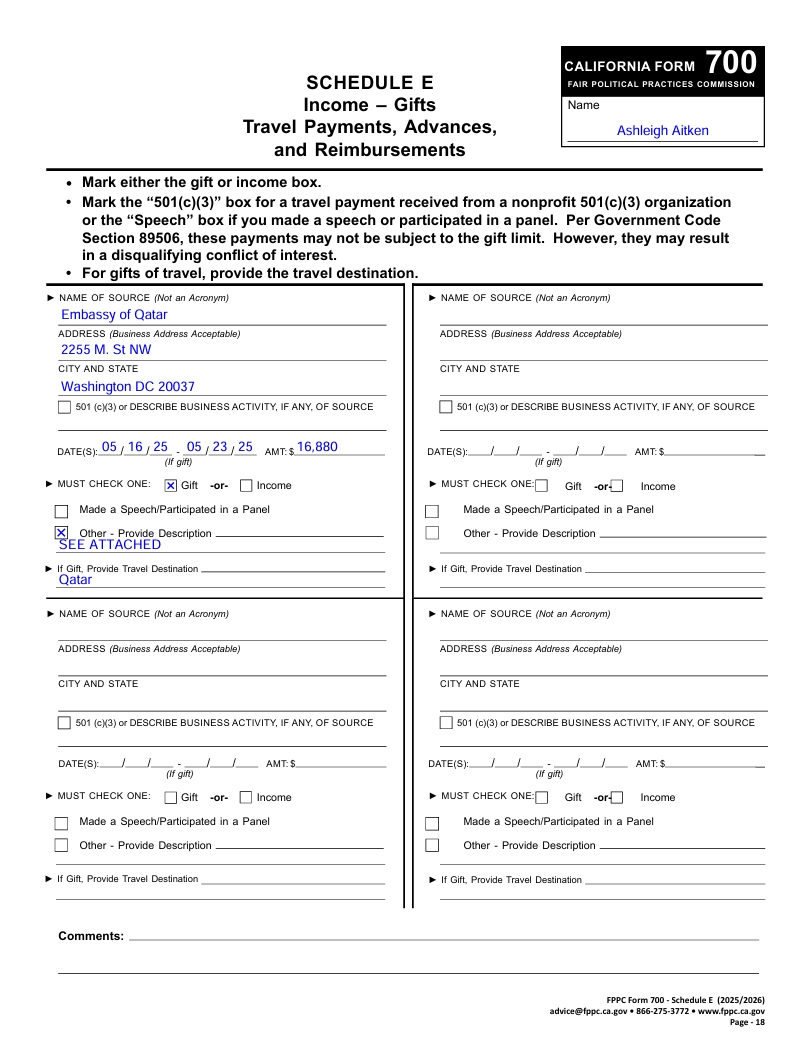
Schedule E of a Form 700 that Aitken filed in April 2026.
Last Friday, The Investigator sent a message to Penn—copied to the mayor at three email addresses she routinely uses—asking whether he possessed any records of contacts or communications with Qatari officials referencing Chapman University. The request also sought agendas, itineraries, briefing materials, talking points, and other documentation that could explain the purpose of his involvement in his wife’s trip, including any previously undisclosed exchanges concerning academic partnerships, official events, or coordinated travel arrangements.
In addition, we asked Penn to produce any emails, notes, summaries, or materials reflecting interactions with educators, academic representatives, or ministry personnel, including documents showing planned or actual meetings that might reveal additional context. Moreover, we invited him to share any other records that could help clarify his role during the visit, emphasizing that any information shedding light about his activities would assist in establishing an accurate account of his participation. Ultimately, he declined to respond to our inquiry.
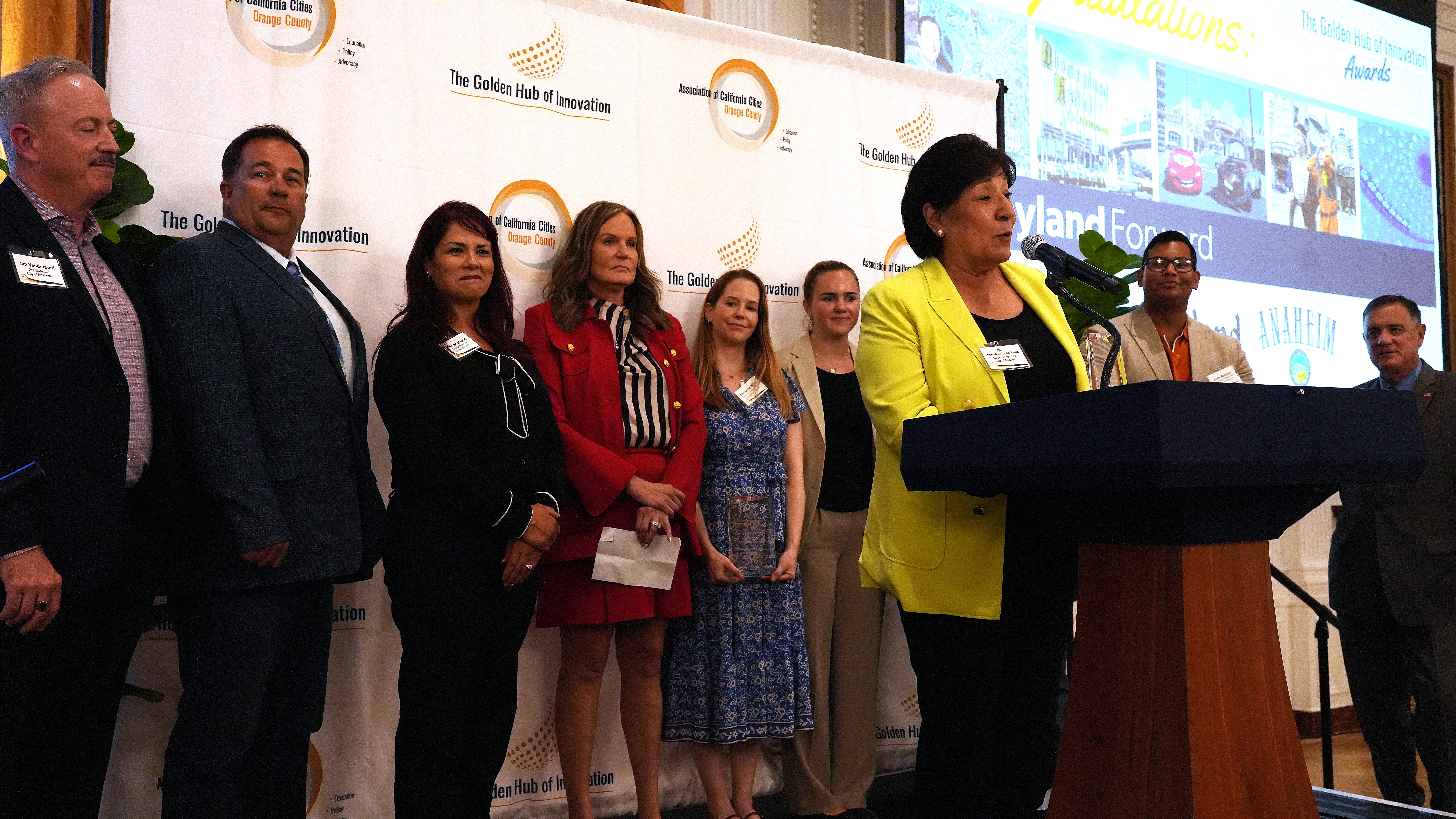
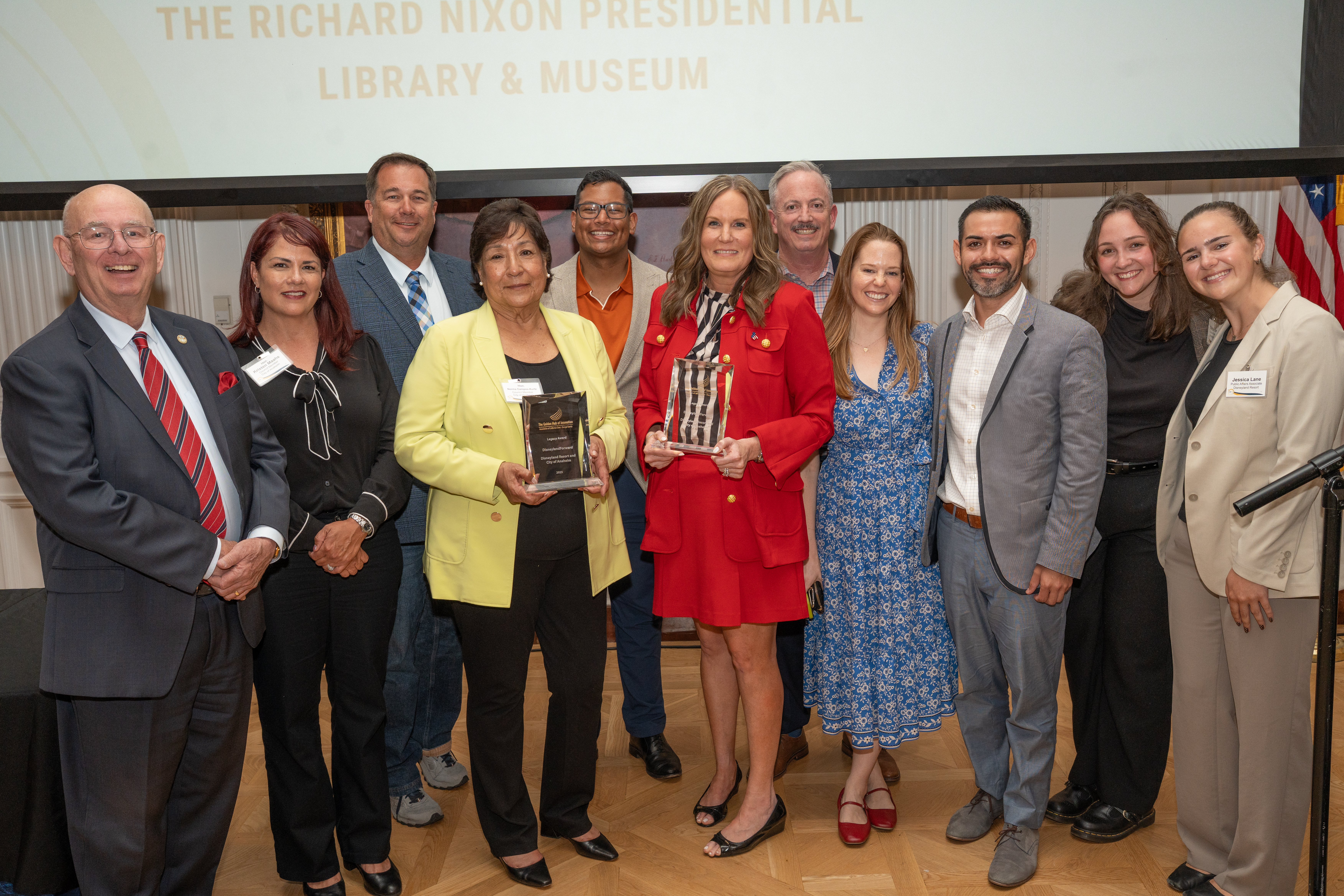
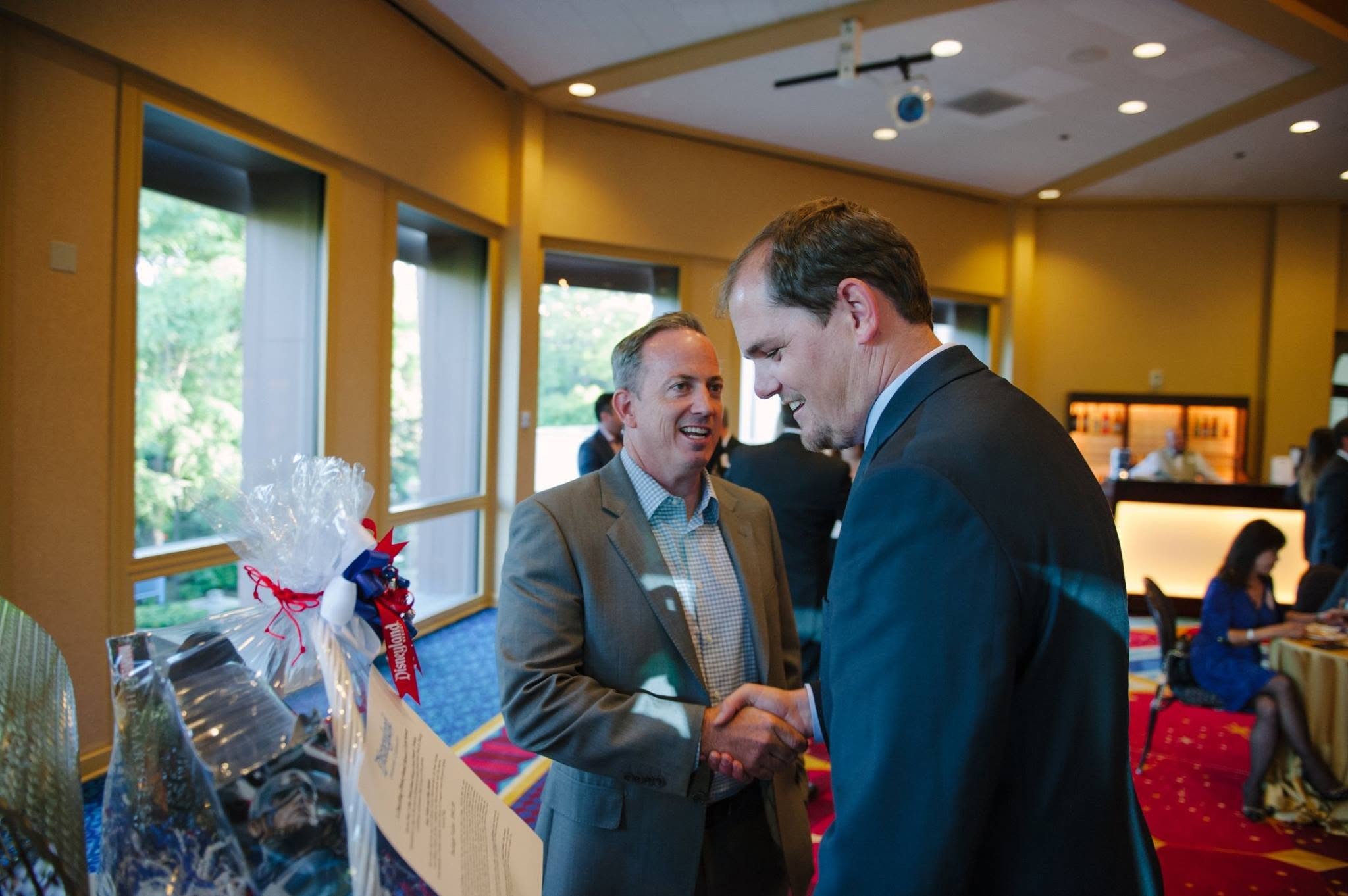
Councilwoman Norma Campos-Kurtz (in yellow) accepting a joint award on behalf of the city for its partnership with the Disneyland Resort in June 2025.
By DUANE J. ROBERTS Editor & Publisher
The Anaheim Investigator has uncovered evidence that Anaheim officials participated in a June 11, 2025 gala sponsored by the Association of California Cities–Orange County, where the City of Anaheim and Disneyland Resort were jointly honored with the group’s most prestigious award for their collaborative work on DisneylandForward, a multi‑billion‑dollar expansion of the theme park. Councilmembers and city staff didn’t just witness the presentation—they actively took part in it. Yet six days later, at the June 17th council meeting, no mention of it appeared in official proceedings.
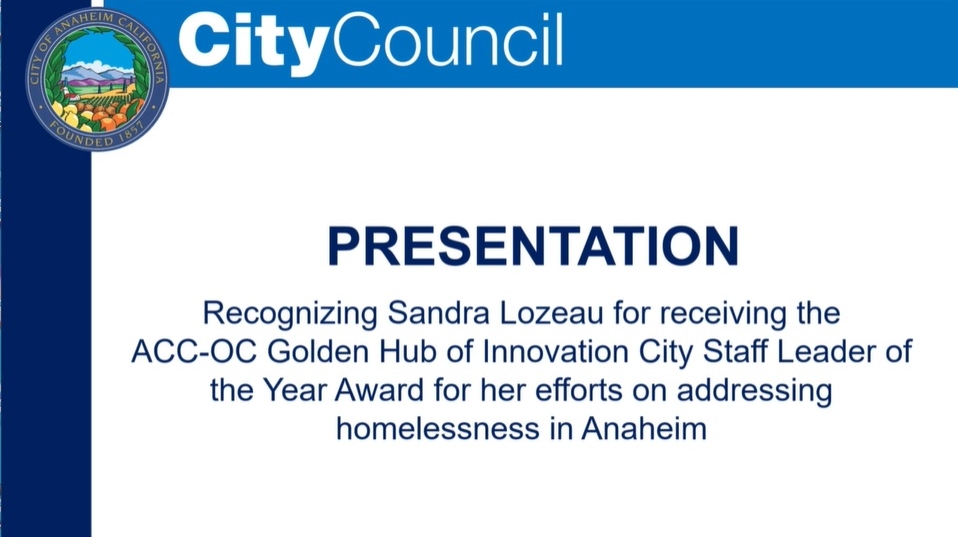
The omission becomes more striking given the treatment of another award the city received at the same ACC‑OC gala: a staff honor presented to Sandra Lozeau, Deputy Director of Housing and Community Development, for her leadership role in tackling homelessness. Her recognition received prominent agenda placement, a detailed staff report, and enthusiastic public remarks during the June 17th meeting. By elevating Lozeau’s award while burying one tied to DisneylandForward, city leadership has raised questions about why information about the latter was withheld from residents.
Screenshot of video from the June 17, 2025 council meeting.
The accolade Anaheim kept off the agenda was the Legacy Award—ACC‑OC’s highest‑tier honor–typically reserved for projects this organization characterizes as structurally transformative and politically significant. Far from a routine commendation, this award spotlights initiatives that reshape how cities negotiate development, manage land‑use authority, and influence regional governance. Within their awards hierarchy, it stands as the strongest endorsement of work they believe will have a lasting imprint on public policy, economic growth, or community planning in Orange County.
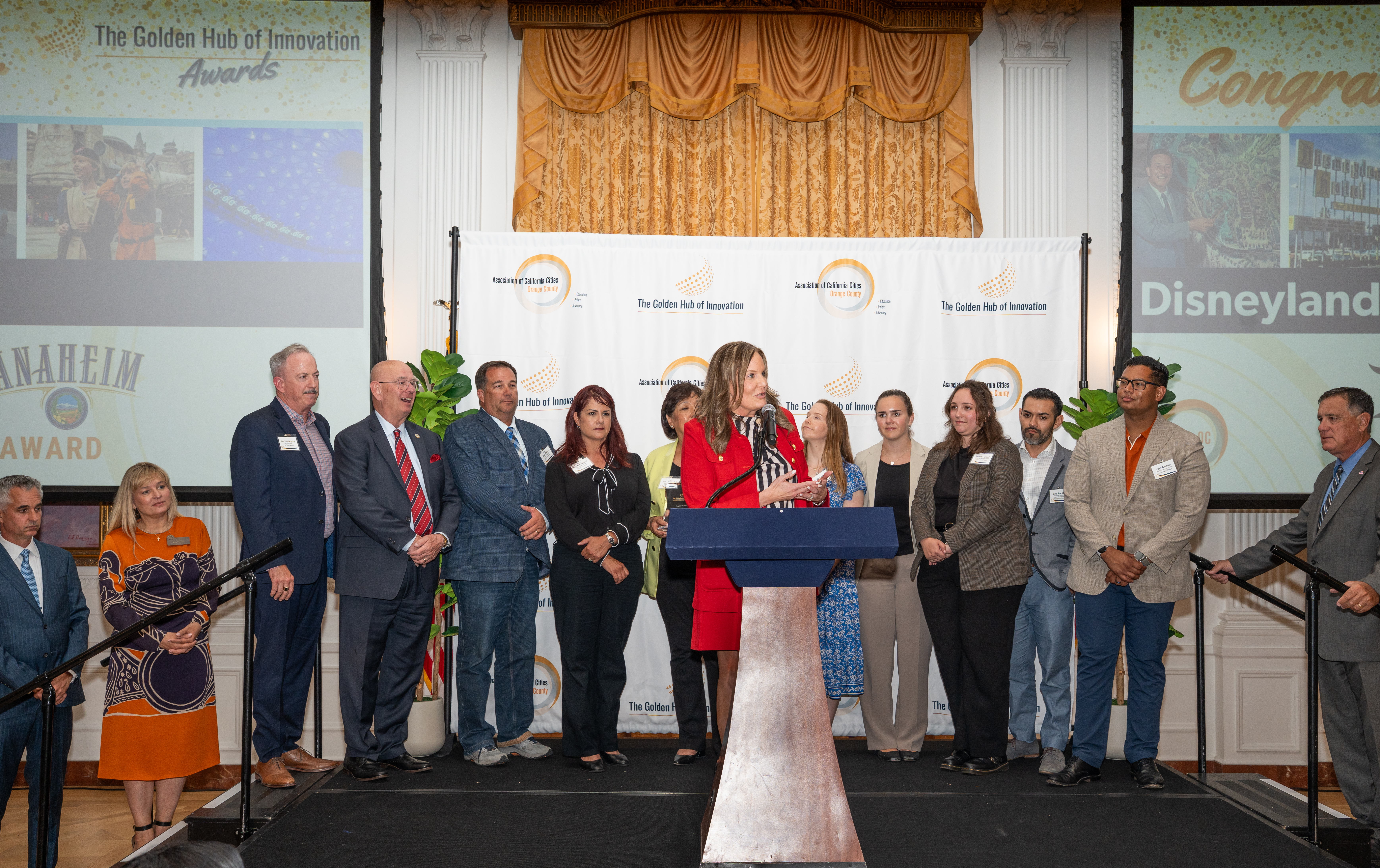
Photographs confirm that four current councilmembers—Norma Campos‑Kurtz, Ryan Bailus, Carlos Leon, and Kristen Maahs—were present, along with Vanderpool. With the exception of Leon, all referenced the ceremony in their public calendars, though in notably vague and ambiguous terms. Vanderpool, usually meticulous about documenting attendees at events he was at, merely listed “City Staff” and “ACC OC members.” Maahs offered more details, but none disclosed which representative from the entertainment giant stepped up and accepted the award shared with Anaheim.
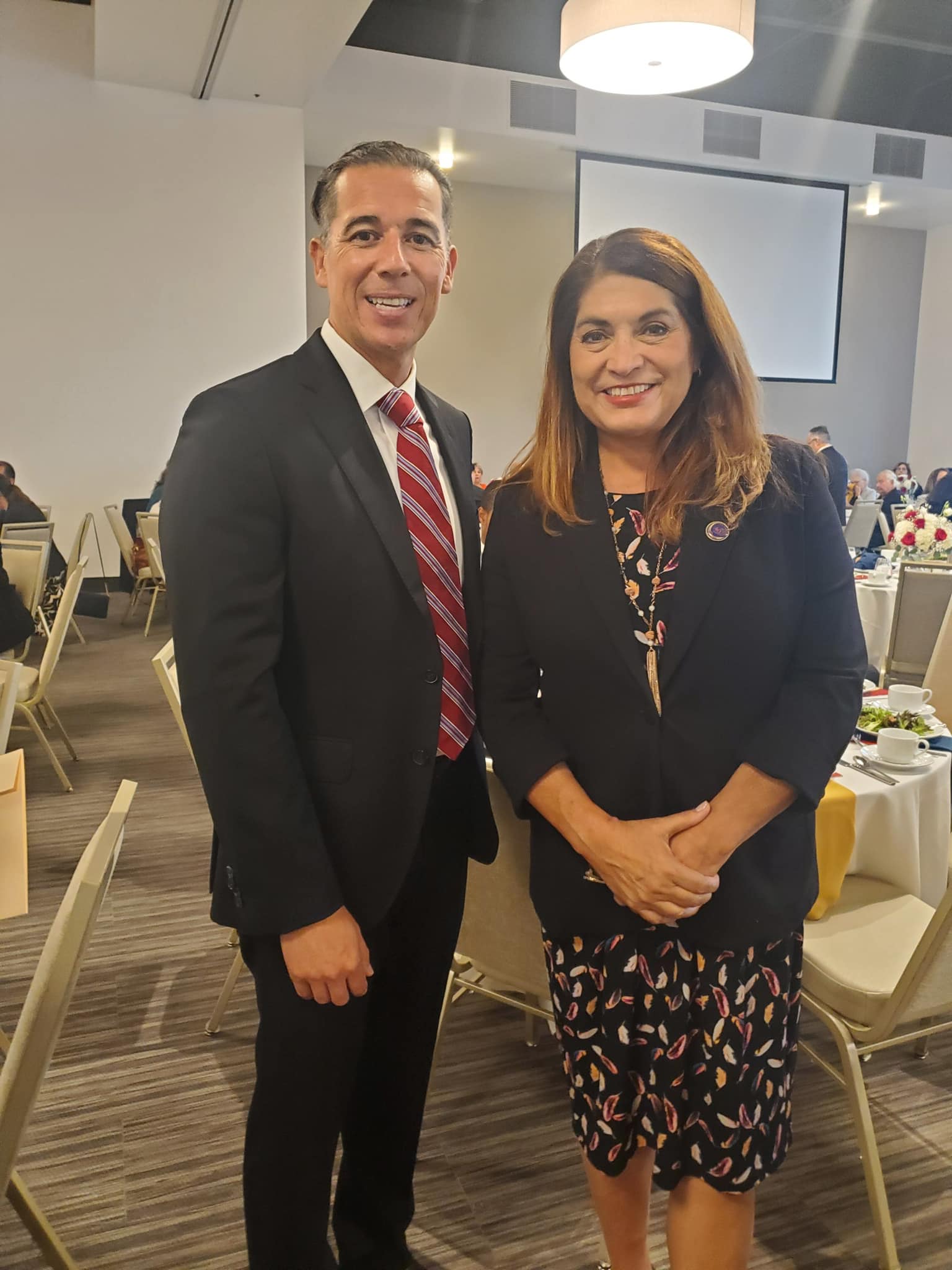
Carrie Nocella (in red) accepting the joint award with her team.
Campos-Kurtz and Nocella display award plaques.
The Investigator contacted Chief Communications Officer Mike Lyster and each of the four councilmembers who attended the ACC‑OC Leadership Summit on June 11, 2025 to find out the reason the Legacy Award—recognizing Anaheim’s partnership with the Disneyland Resort on DisneylandForward—was omitted from the June 17th council agenda. Our inquiry focused on why Lozeau’s honor received a full presentation and public acknowledgment at the meeting, while the Legacy Award was not mentioned at all, despite its relevance to one of the city’s most significant development efforts.
“We are proud of our city’s work on DisneylandForward, knowing it will bring years of added funding for public safety, libraries, community centers and other services directly benefiting our community,” Lyster told us via email. He added that “while appreciated, not every recognition we receive is mentioned at Council.” In contrast, he said “recognizing Sandra Lozeau was another matter entirely. We welcomed the opportunity to highlight a longtime employee for her incredible work on affordable housing, addressing homelessness and so many other important issues for Anaheim.”
From the ACC-OC 2025 Annual Report.
Only two councilmembers responded to our questions. Maahs said, “I generally keep my council comments focused on District 5 and events taking place there,” adding “there wasn’t any specific reason I didn’t mention the award.” Leon, for his part, expressed thanks “for all of the work Sandy has done” and stated the recognition she received at the gala was well‑deserved, though he couldn’t stay until the end. He noted his main focus on June 17th was addressing “the fear and uncertainty” caused by recent immigration raids and informing residents about the newly launched Anaheim Contigo initiative.
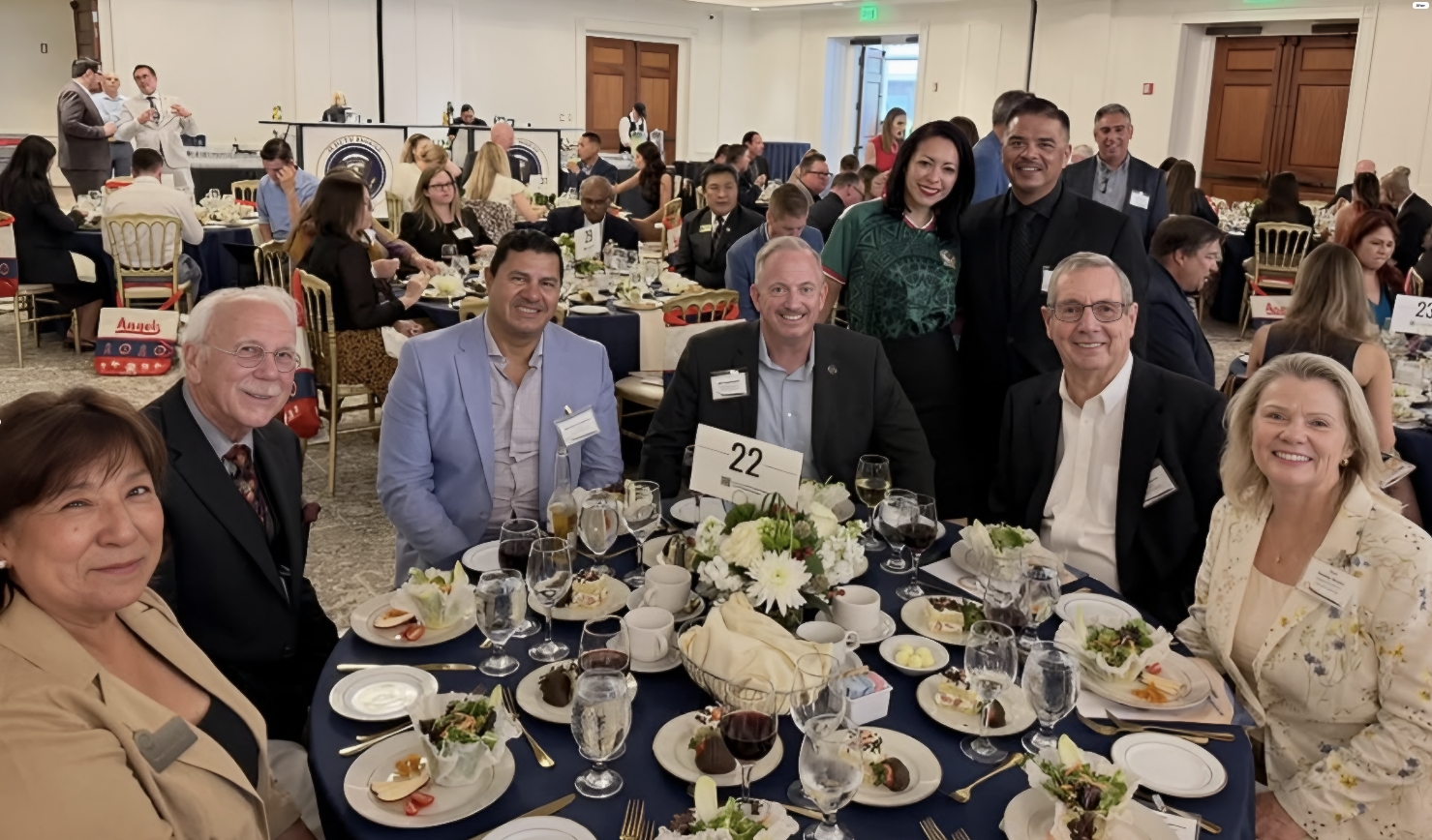
Ex-City Manager James Vanderpool and his husband (center) dining with councilmembers at the Nixon Library on June 24, 2026.
By DUANE J. ROBERTS Editor & Publisher
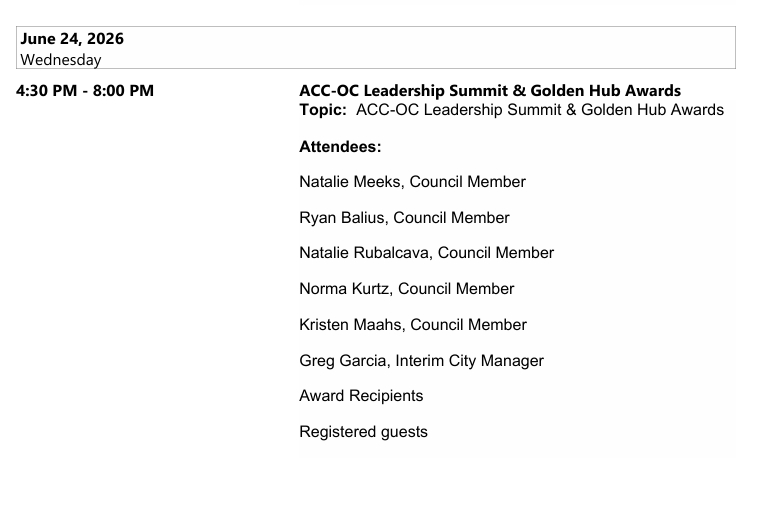
The Anaheim Investigator has obtained photographs showing ex‑Anaheim city manager James Vanderpool dining with councilmembers at an awards gala held on June 24, 2026 at the Richard Nixon Presidential Library and Museum in Yorba Linda. Vanderpool attended the event with his husband, Hernan Cortez, solely because he had been nominated for City Manager of the Year—a distinction that he ultimately did not receive, despite his long public tenure and the considerable political power he once wielded.
But his appearance at this private gathering comes as he still remains a deeply controversial figure in Anaheim, shadowed by scrutiny over his role in influence‑peddling scandals and the turmoil that followed. The gala’s exclusive nature raises questions about whether the same networks that shaped city policy in the shadows continue to operate with confidence, familiarity, and ease even as residents demand genuine accountability rather than recycled political theater that offers little meaningful reform.
The gala, formally titled the Annual Leadership Summit and Golden Hub of Innovation Awards, was hosted by the Association of California Cities–Orange County, a taxpayer‑subsidized nonprofit long criticized for operating as a parallel decision‑making arena. ACC‑OC’s events routinely bring together elected officials, city staffers, lobbyists, consultants, and business figures in settings shielded from public view, reinforcing concerns policy is often influenced socially rather than through democratic processes.
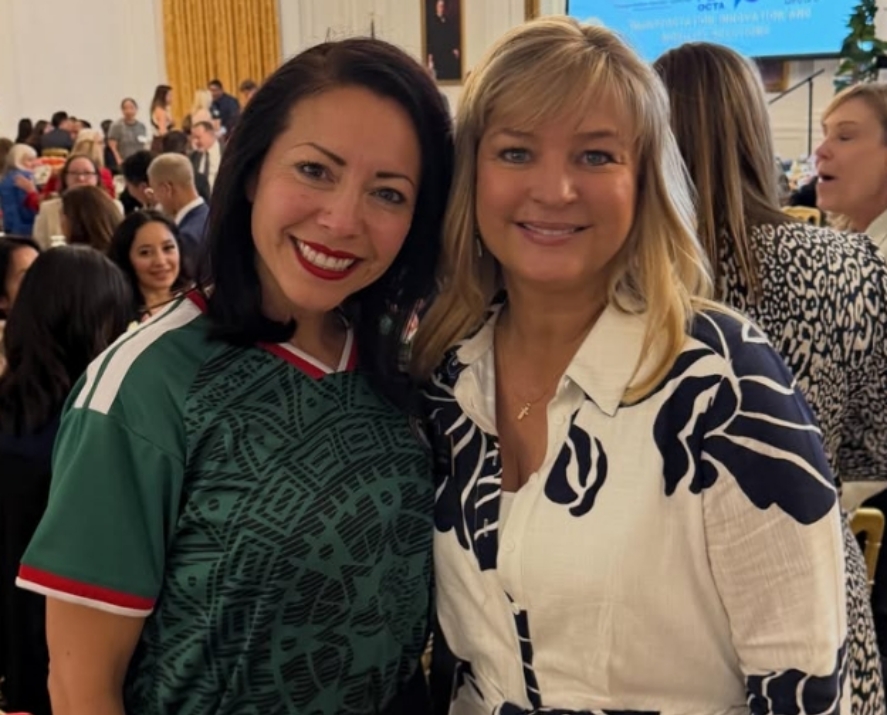
Councilwoman Natalie Rubalcava with Kris Murray at the June 24th gala.
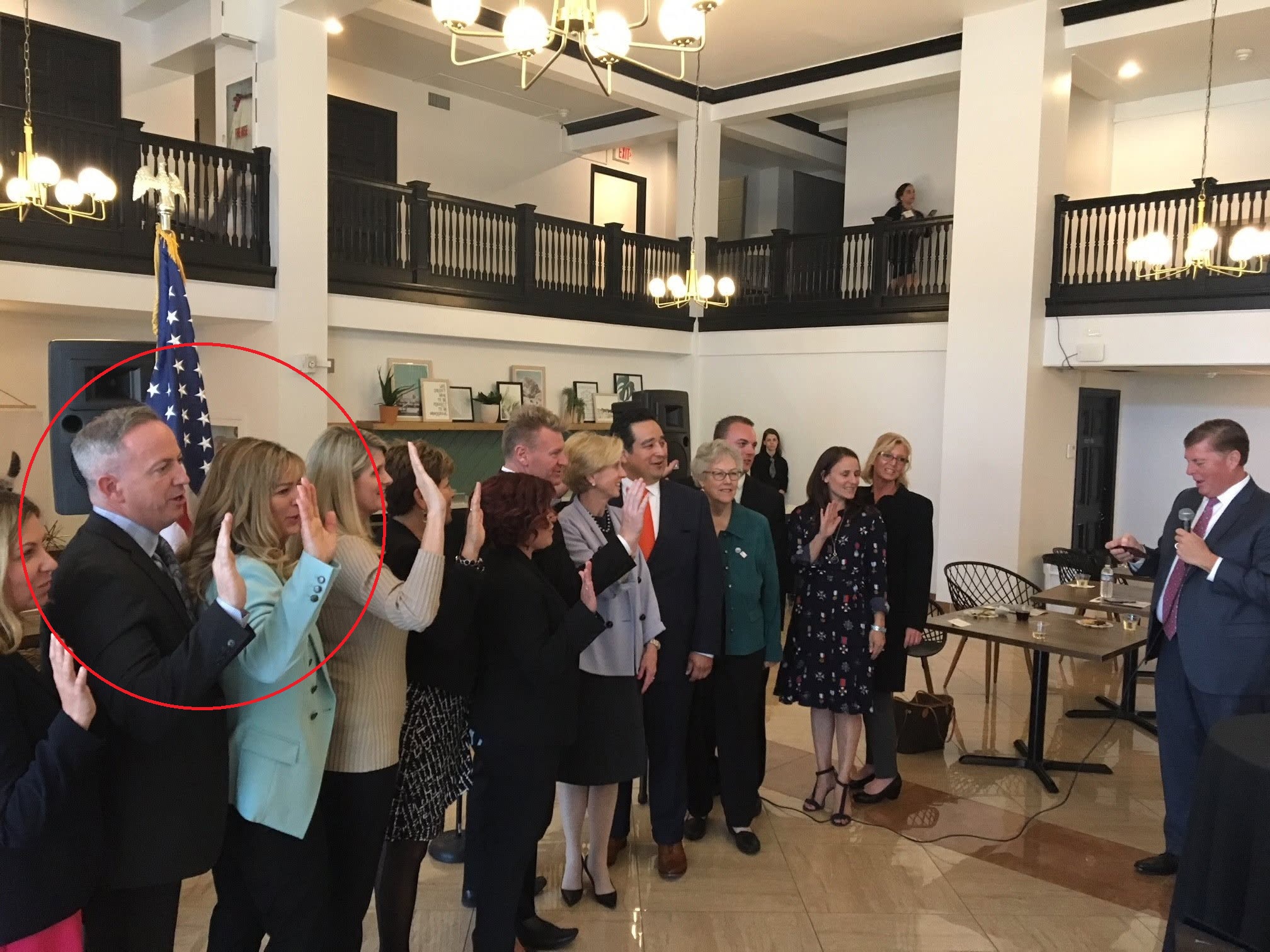
Vanderpool and Murray (circled in red) being sworn in by Curt Pringle in April 2018.
The gala’s keynote speaker was Molly Jolly, President of Angels Baseball, a choice that reflects ACC-OC’s recent practice of placing business figures with vested interests in Anaheim policy at the center of high-profile events. Also nominated for an award—but not chosen—was Dukku Lee, retired Anaheim Public Utilities general manager. Interim city manager Greg Garcianoted in his calendar five councilmembers attended: Ryan Bailus, Norma Campos‑Kurtz, Kristen Maahs, Natalie Meeks, and Natalie Rubalcava.
Brochure page showing sponsors of the June 24th gala.
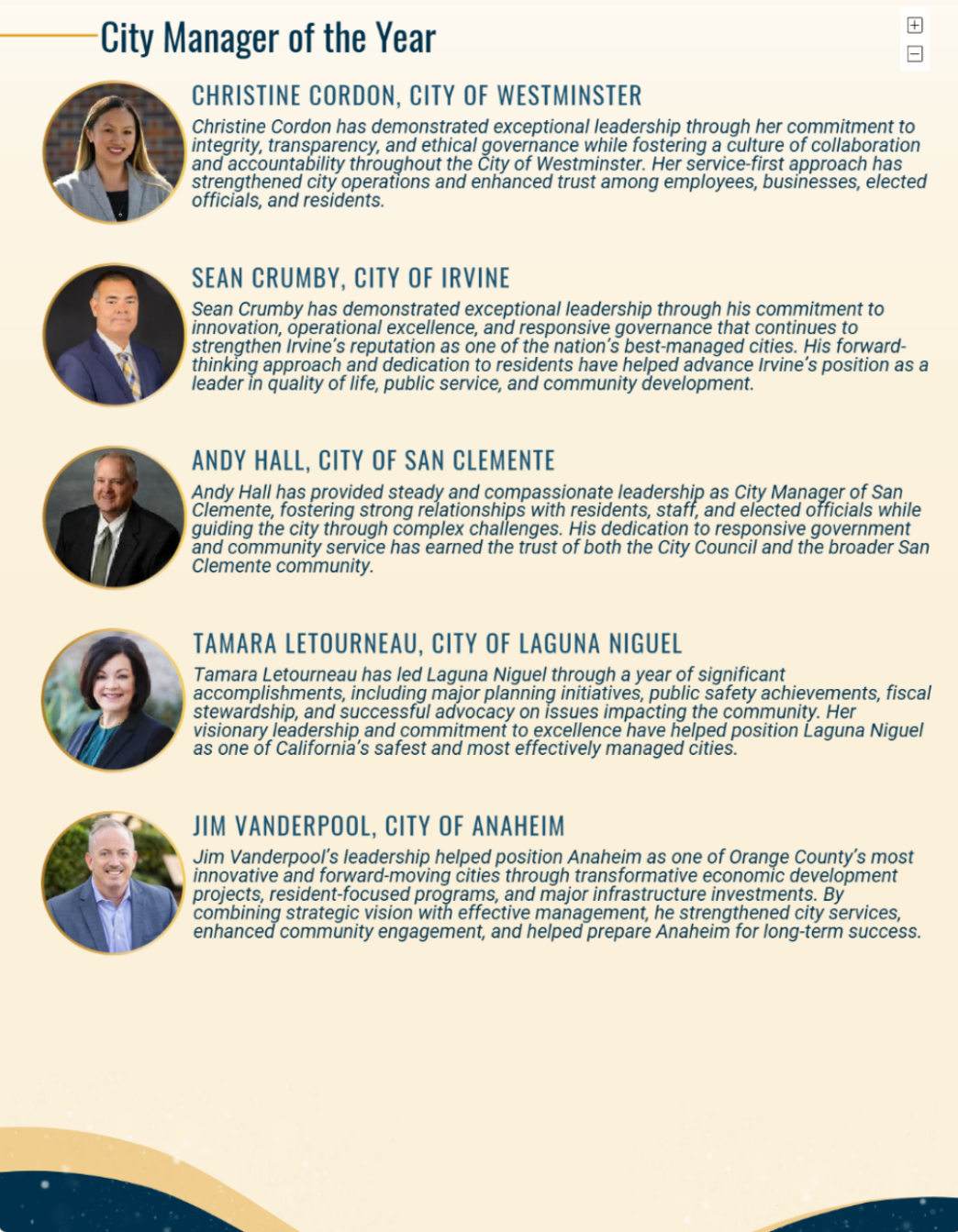
Brochure page showing nominees for City Manager of the Year.
Remarkably, most media reports discussing this email have completely overlooked the fact that one of the invited consultants was Murray, who then was on the Anaheim Chamber payroll working on Anaheim First—something The Investigator first discovered in 2019. Her attendance at the retreat should be no surprise given she and Vanderpool already shared deep longstanding ties through their active involvement in the ACC-OC, dating back years before they even served together on its board.
Laura’s email also listed another attendee central to Anaheim’s power structure at that time. Besides the fact her husband, Matt Cunningham, a political consultant, would be present, Todd Ament, then president and CEO of the Anaheim Chamber, and his wife, also were going to be there. The inclusion of Ament placed Vanderpool squarely within a circle of individuals later linked to FBI corruption probes and influence‑peddling allegations detailed in the city-commissioned JL Group report.
Murray’s name (highlighted in yellow) in the leaked email.
The report, released in July 2023, was not kind to Vanderpool. Its findings characterized him as a major participant in Anaheim’s informal influence networks, describing back‑channel communications, undisclosed relationships with lobbyists, and a pattern of coordinating with consultants outside public view. Investigators concluded the city manager repeatedly blurred professional boundaries, maintained selective alliances, and engaged in behavior that undermined transparency and public trust.
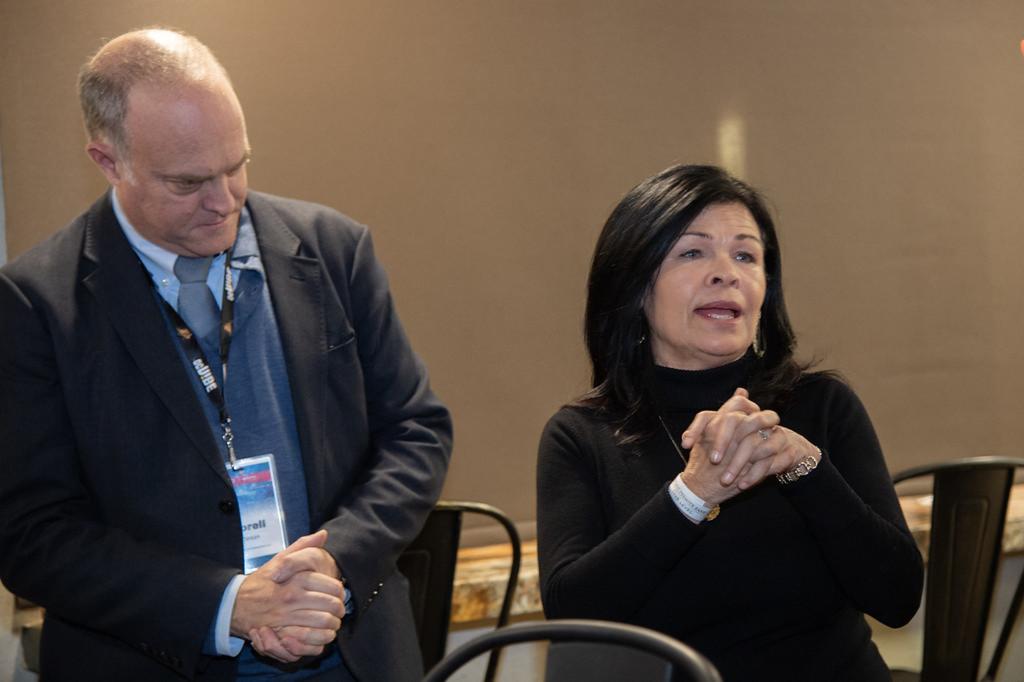
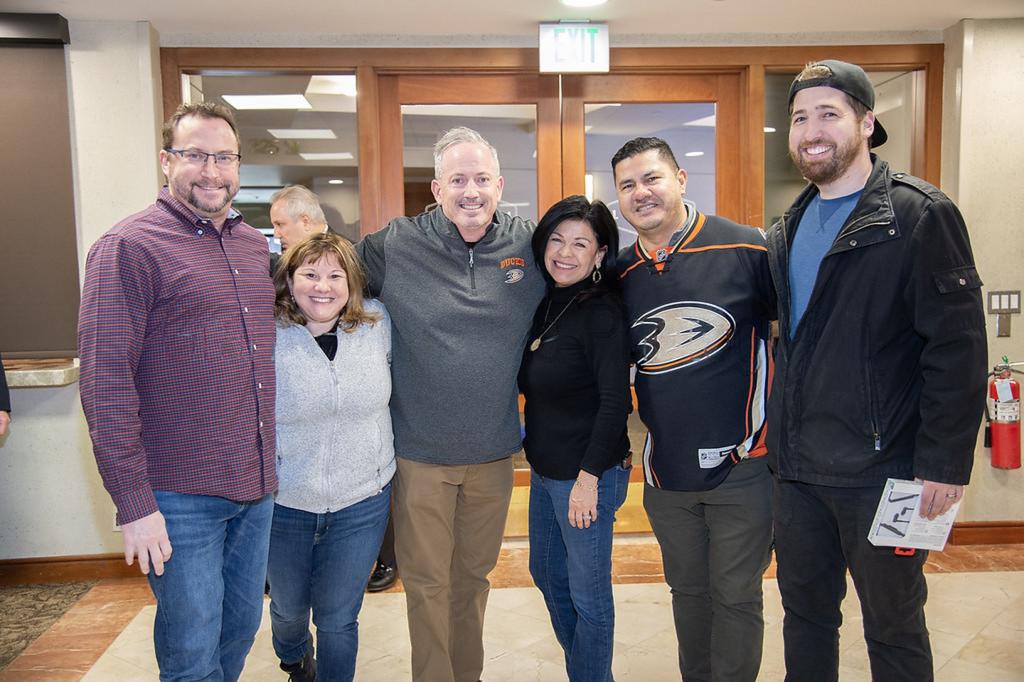
The Investigator later uncovered evidence which independently corroborated several claims the JL Group made about Vanderpool’s behind‑the‑scenes conduct. Months after the report came out, photos surfaced from early 2023 showing the city manager at a Ducks Chamber Night event—a private gathering at the Honda Center—comfortably mingling with Ducks lobbyist George Urch, OC Vibe executive Morrel Morean, and the Cunninghams, offering a rare glimpse into the networks that he navigated.
In one photo, Vanderpool and his husband have their arms wrapped around Laura Cunningham, who was now president and CEO of the Anaheim Chamber. The image is astonishing given her past role as a spokeswoman for the “Yes on Proposition 8” campaign in 2008, the ballot measure which tried to outlaw same-sex marriage in California. At the time, she worked for Jeff Flint, then a partner at the Sacramento‑based consulting firm Schubert Flint Public Affairs, which ran the statewide effort.
Morrel Morean and Laura Cunningham in 2023.
George Urch and Vanderpool with Matt Cunningham (center) in 2023.
Vanderpool and his husband with Laura (center) in 2023.
Their relationship was further reflected in a 2022 Facebook message where Vanderpool shared photos of him and his husband at a beach. Both Flint and Laura–along with Kris Murray–posted positive comments about the couple, reinforcing the impression of tight personal bonds. Before Flint, who is mentioned prominently in the JL Group report, became a consultant, he had served as Pringle’s deputy chief of staff while he was in the state assembly; Matt Cunninghambriefly worked as his press secretary.
Taken together, these findings illustrate networks that have existed for decades, linking lobbyists, consultants, former elected officials, and senior city staff through personal relationships and private social events. Vanderpool’s presence within these circles—even after being exposed by the JL Group—suggests that Anaheim’s political culture is being shaped by longstanding alliances rather than public accountability. These ties did not fade away but persist to this day with remarkable continuity.
Jeff Flint and Todd Ament with Murray (center) in December 2018.
Ament, Flint and Vanderpool may have been pushed off Anaheim’s political stage, but the influence networks they cultivated continue operating with striking resilience. The Cunninghams still move quietly through the same circles, appearing at private gatherings—including last month’s gala–despite no longer being part of the Anaheim Chamber. Around them, new lobbyists and consultants have emerged, molded by the same processes, ensuring these networks will endure regardless of who comes and goes.
ACC‑OC, now led by Murray, appears to have become the latest hub where these reconstituted networks gather. The group’s events routinely bring together elected officials, city staffers, lobbyists, consultants, and business figures–some of whom previously operated through the Anaheim Chamber. Photos and records show that these individuals continue to interact socially and politically, maintaining influence through informal access points that mirror the same dynamics documented in the JL Group report.
Despite Anaheim’s attempts at “reform,” the underlying power structure remains largely unchanged. The same constellation of actors continues to exert undue influence on the city, simply relocating their activity to venues less associated with past scandals. These networks have survived by adapting, not retreating, preserving relationships that allow them to shape policy discussions far away from public view. While the geography of influence has shifted, the architecture of power still remains firmly in place.
Urch and Murray with Pringle (center) in April 2012.
Vanderpool with Matt Hicks, now a lobbyist for OC Vibe, in July 2016.
The Investigator reached out to Mike Lyster, the city’s chief communications officer, and the five councilmembers who attended, seeking answers about the June 24th gala: who nominated Vanderpool for the City Manager of the Year award; who paid for his and his husband’s tickets; who covered councilmembers’ and spouses’ tickets; whether the city paid for them and, if so, how much did they each cost; and how much membership dues does the city pay to the ACC‑OC on an annual basis.
Because Lyster was on vacation, Esther Kwon Baek, his deputy communications officer, responded by saying the “city paid for our councilmembers to attend, in addition to two spouses. The city did not pay for Jim Vanderpool or his spouse.” Councilwoman Campos-Kurtz acknowledged she was there, adding that “Mayor Aiken did rsvp for herself and a guest so tickets were also made available for her.” Councilman Ryan Bailus said the tickets cost $150 each and that he nominated Dukku Lee for an award.
Sharon Quirk-Silva, a state assemblywoman currently serving the 67th District, with Victor Farfan, a Hawaiian Gardens city councilman, in 2023.
By DUANE J. ROBERTS Editor & Publisher
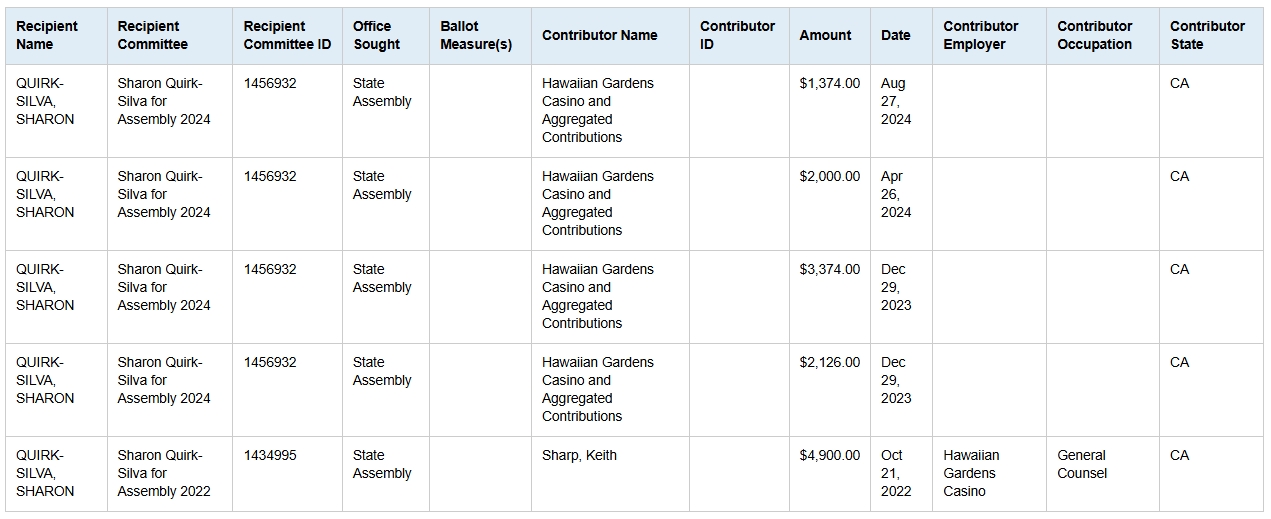
The Anaheim Investigator has learned from campaign finance disclosures that the Hawaiian Gardens Casino in Los Angeles County–a card club that is owned by a Florida-based family which uses the profits it generates to bankroll far-right settler movements in Israel—has made thousands of dollars in contributions to multiple lawmakers here in Orange County, including State Assemblywoman Sharon Quirk-Silva.
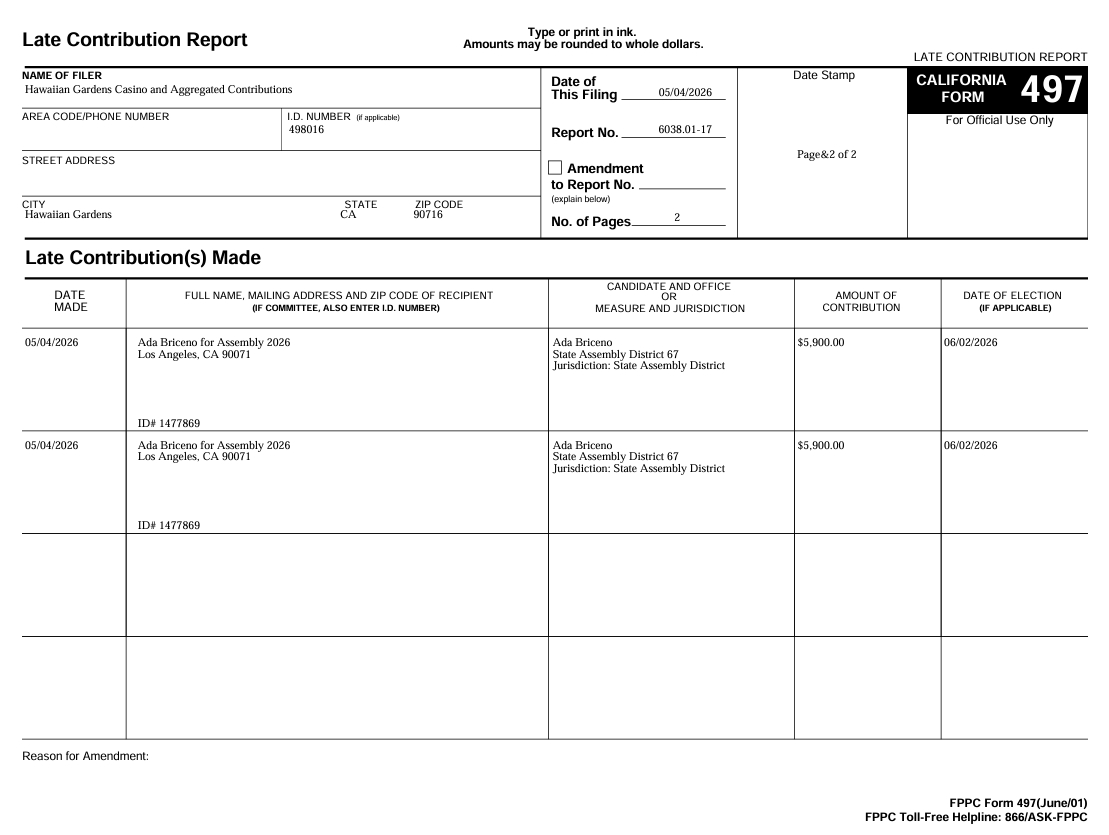
Moreover, prima facie evidence suggests their motive for spending $221,302 to boost Ada Briceño, a union leader seeking to replace Quirk-Silva in the 67th State Assembly District, may be driven by the presence of an opponent aligned with California State Attorney General Rob Bonta, the latter of whom has aggressively pushed for tougher regulations of their industry, such as tightening dealer rules and limiting blackjack.
The whole brouhaha over the casino’s political loyalties erupted when Mark Pulido, a Cerritos councilman also running for that seat, blasted Briceño in a press release claiming she “is being promoted to voters by a vocal and active Trump donor – one who was named a top‑ten donor to the 2020 presidential campaign,” pointing to records identifying Cherna Moskowitz, the late mother of the current owners, as a key backer.
In response, Briceño told the Los Angeles Times that “anybody who knows my work knows I have fought against Trump and MAGA with every fiber of my being,” saying “I strongly oppose the Moskowitz family’s positions on Trump and their support of the settlements, which displace Palestinians in the West Bank, and I am willing to say that.” She further pledged the $11,800 in cash they gave her would be returned.
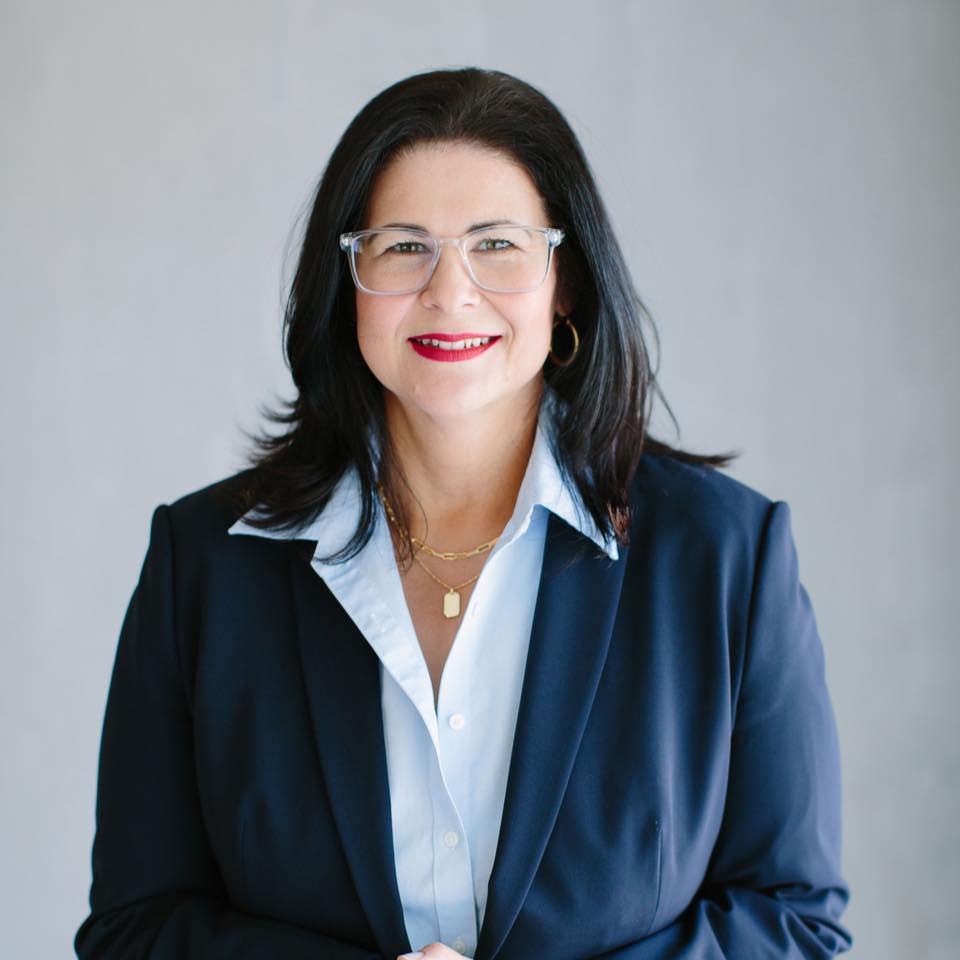
Ada Briceño
Though individuals familiar with local politics originally believed the card club was supporting Briceño because of her role in blocking Gaza ceasefire resolutions while chair of the Orange County Democratic Party, evidence for that is slim. Instead, it appears they–along with the California Commerce Club, a friendly rival–are rallying behind her to prevent Pulido from winning. Their likely concern is his close ties with Bonta.
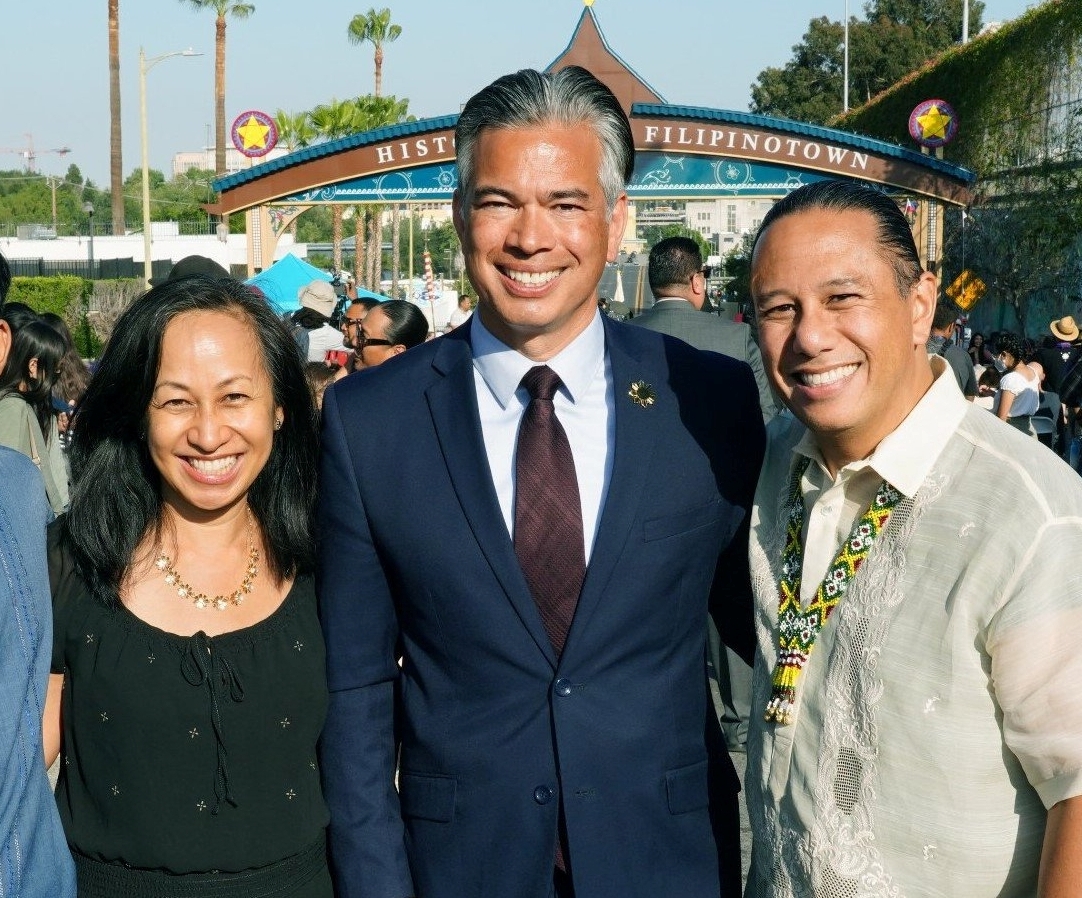
Attorney General Rob Bonta with Mark Pulido (right) and his wife in 2022
Briceño isn’t the only candidate this gambling operation has backed here in Orange County. Shortly after the boundaries of the 67th State Assembly District were redrawn to include the City of Hawaiian Gardens, they began pouring cash into Quirk-Silva’s re-election bids. Between 2022 and 2024, campaign finance disclosures filed with the California Secretary of State reveal she got $13,774 from them and a top employee.
Another recipient of cash was Avelino Valencia, who represents the 68th State Assembly District.Form 461’s show between 2023 and 2024 they gave the lawmaker from Anaheim about $8500. Perhaps unsurprisingly, he sits on the Committee on Governmental Organization, a body which has jurisdiction over the multi-billion-dollar gaming industry–from the state lottery and horse racing to tribal casinos and card clubs.
Local Republicans also got their fair share. Thousands of dollars have flowed into the coffers of former State Assemblywoman Janet Nguyen, State Assemblywoman Diane Dixon, State Assemblyman Tri Ta, and State Senator Tony Strickland. Despite the Moskowitz family’s inclination to fund that party’s politicians at the federal level, most money they spend in California goes to Democrats because they control the legislature.
Campaign finance data from the California Secretary of State.
Far from limiting itself to local races, the Hawaiian Gardens Casino appears to be pursuing influence across California, targeting contests that determine industry regulations. Form 461s reviewed by The Investigator indicate the card club has given money to at least half of the lawmakers who serve on the Committee on Governmental Organization. Members of that body from Orange County not only include Valencia, but Dixon and Tri Ta.
With respect to statewide offices, they once confined most of their campaign spending on attorney‑general candidates. However, in recent years, their strategy has branched off into other top positions. Public records show they made a $20,000 contribution to Matt Mahan—the first Democrat for governor they have backed since Jerry Brown, the latter of whom was a supporter of their industry, but strictly for economic reasons.
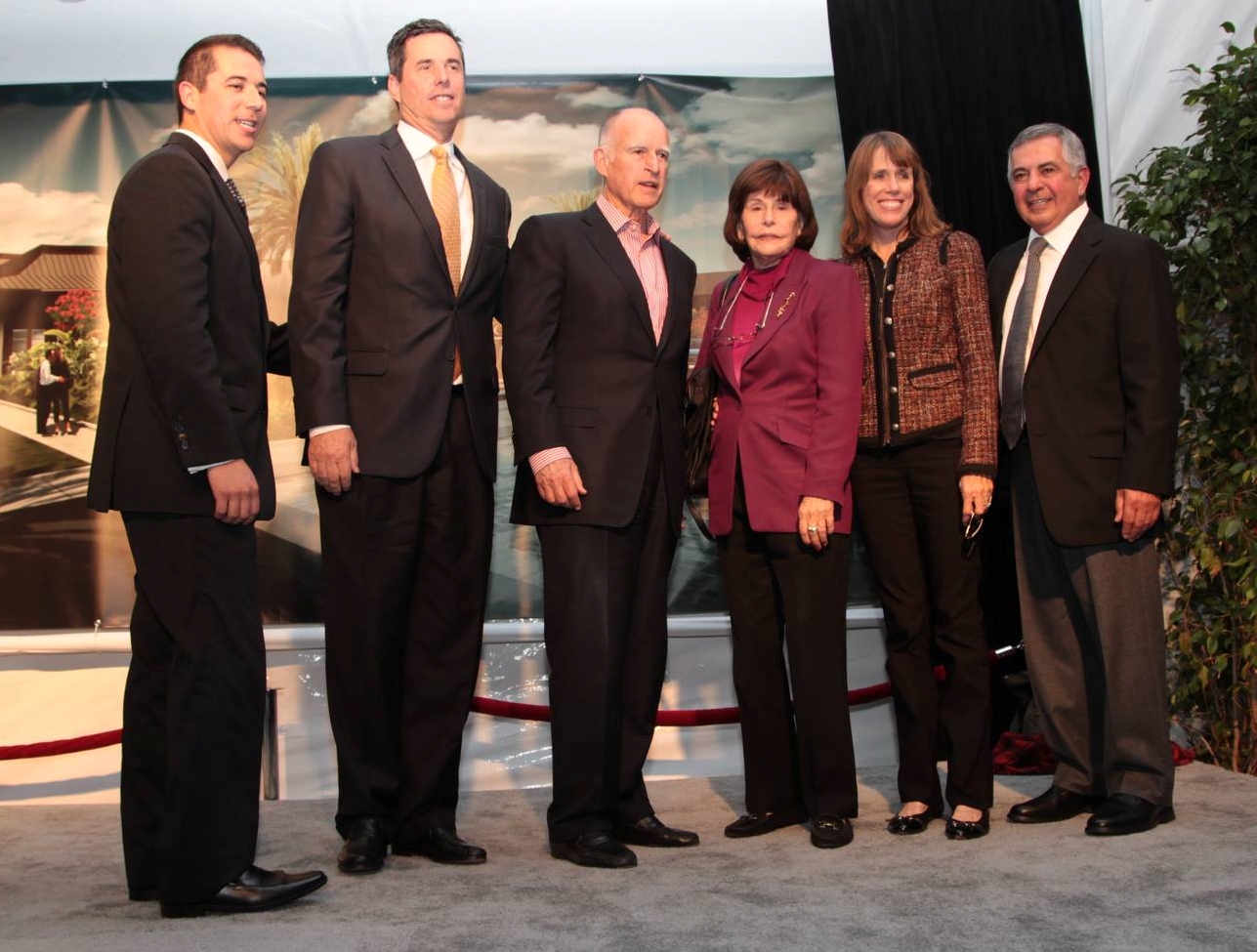
One photo The Investigator obtained of the groundbreaking ceremony Brown attended show him standing in between Cherna Moskowitz,who died in 2024, and David Moskowitz, her son. Directly behind her is Laurie Moskowitz Hirsch, her daughter, and Ron Sarabi, general manager of the card club. On David’s right is Victor Farfan, a city councilman whose runs for public office have been heavily funded by the family.
Governor Jerry Brown with the Moskowitz family in 2013.
Among the most notable contributors identified in Form 990s filed with the Internal Revenue Service is the Irving I. Moskowitz Foundation, named after the late father of the current casino owners, who died in Miami Beach in 2016. The Investigator estimates that between 2008 and 2024, the foundation routed nearly $12.7 million in cash to CFI. However, it is one of several non-profits they have given money to that perform a similar role.
The Moskowitz family has a well-documented history of backing causes aligned with Israeli settlers in the occupied territories. Its donations to CFI and other entities have helped finance groups like Regavim, which set the stage for school demolitions and other repressive measures. The end result is a legally structured pipeline linking millions of dollars in American gambling profits to on‑the‑ground ethnic cleansing overseas.
Children at the site of their former school in Jib al‑Dib in 2023.
Because Quirk-Silva and Valencia both represent parts of Anaheim, The Investigator reached out to them to inquire how they feel about accepting money from a “Trump donor” whose lucrative gambling operations finance extremist settler movements in Israel. Additionally, we wanted to know if they would return the contributions, as Briceño pledged to do. So far neither has bothered replying to any of the questions we emailed.
However, a card club license renewed in February 2025 by the California Gambling Control Commission confirms this casino is still owned by a Florida‑based family with a history of funneling tens of millions of dollars of its profits into a foundation they use to bankroll extremist settler movements in Israel involved in the displacement of Palestinians.
Although the motivations behind their decision to boost Briceño—a prominent leader of a major hotel and restaurant employees union—remains unclear, individuals familiar with local politics told The Investigator it could stem from her role in helping block several Gaza ceasefire resolutions during her tenure as chair of the Orange County Democratic Party in 2024.
Form 497 filed with the California Secretary of State on May 4th.
On his agenda for Miami is a meeting with Laurie Moskowitz Hirsch, a right-wing philanthropist. She runs the Irving Moskowitz Foundation, which was established by her late parents, Irving and Cherna Moskowitz. Irving Moskowitz was a longtime patron of Jewish settlers in East Jerusalem and the West Bank, purchasing land to prepare it for Jewish residents.
She also sits on the board of the Hebron Fund, which promotes ‘a strong Jewish presence in the holy city of Hebron.’ The organization’s international spokesman is Yishai Fleischer, a Ben-Gvir confidante who serves as his foreign affairs advisor and is joining him on the trip. Ben-Gvir himself is a resident of Kiryat Arba, the Jewish West Bank settlement outside the city.
Along with her parents and their foundation, she was awarded the World Zionist Organization’s Jerusalem Award for Building the Land of Israel in 2022 ‘for decades of work primarily in the eastern neighborhoods of Jerusalem and the towns of Judea and Samaria,’ the biblical term for the West Bank, ‘in securing strategic properties for the Jewish nation,’ and work that ‘literally changed the map of Israel.’
Hirsch (left) meeting with a settler from Itamar in May 2011.
The Investigator made a good faith effort to reach out to Briceño and ask what she thought about the Moskowitz family using casino profits to bankroll the displacement of Palestinians. Moreover, we inquired about how she felt about them giving $2 million to a Trump “super PAC” a few years ago. She so far hasn’t bothered to respond to our questions.
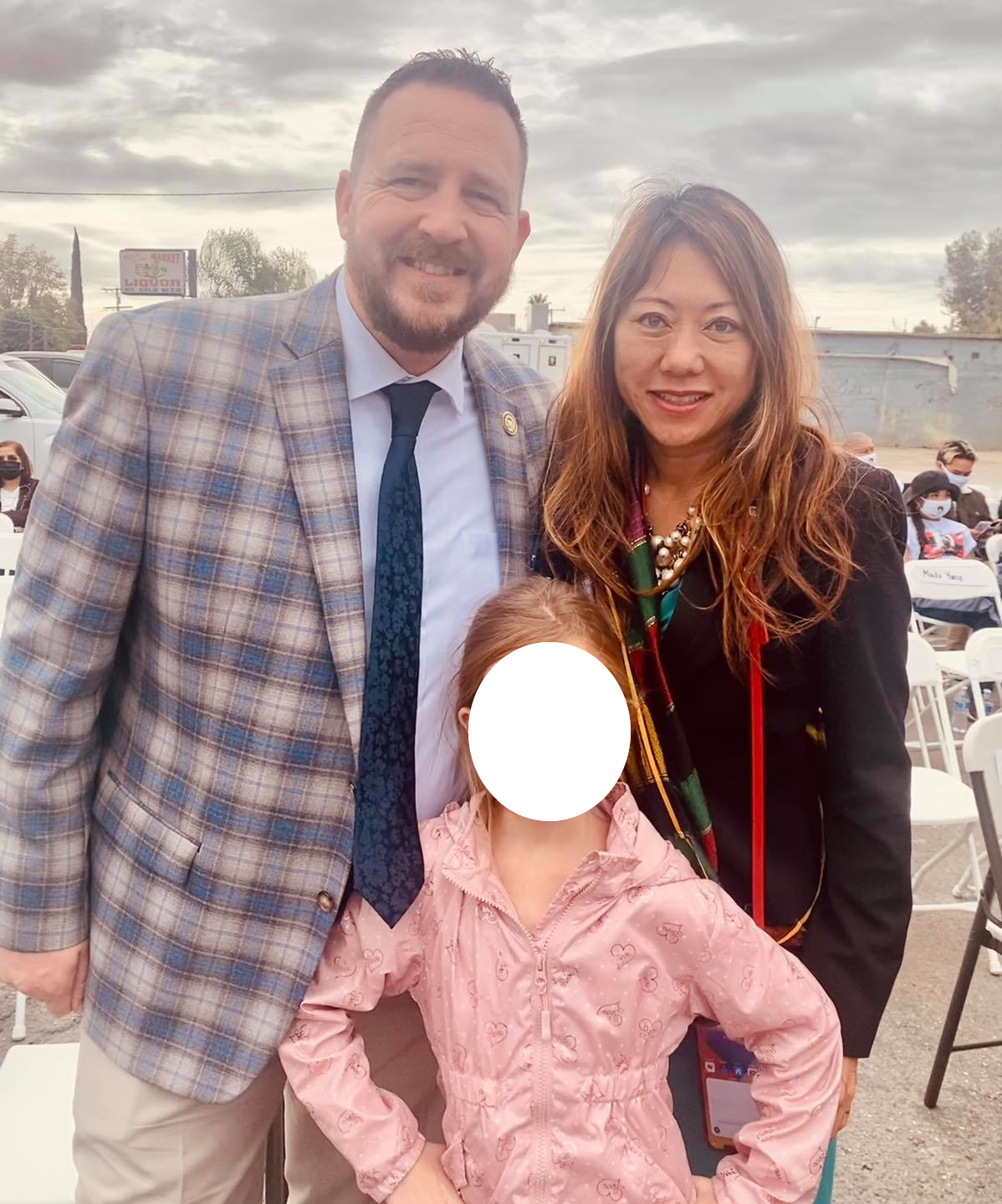
James Vanderpool, City Manager of Anaheim, and Fiona Ma, State Treasurer of California, at a restaurant bar in March 2017.
By DUANE J. ROBERTS Editor & Publisher
The Anaheim Investigator has obtained internal emails, letters, reports, and financial forms showing that State Treasurer Fiona Ma—who is currently running for Lt. Governor–quietly aided Swyft Cities, a crowdfunded high-tech startup based in northern California, encouraging it to seek state financing for its projects, especially a loan guarantee from a public bank she oversees.
The aforementioned documents, all gathered through public records act requests filed with multiple local and state agencies, also reveal a key investor in this firm has known Ma since 2012, and that she is “actively engaging in her network [of contacts] on the company’s behalf,” which, according to one unusual email, includes James Vanderpool, the city manager of Anaheim.
Moreover, they also indicate that Ma’s involvement might have strayed into territory where her public authority and private relationships intersected in ways which raise clear conflict‑of‑interest concerns. That overlap becomes even more apparent as they trace how her actions factored into Swyft Cities rush to secure public‑sector contracts before the 2028 Summer Olympics.
Concept image of aerial gondolas next to a future OCVibe parking garage.
But what was not disclosed is that we had secretly launched a major investigation into a highly unusual email we discovered buried among dozens of communications which strongly hinted that an elected statewide officeholder may have been inappropriately exercising their power to influence government decisions solely on behalf of a private company.
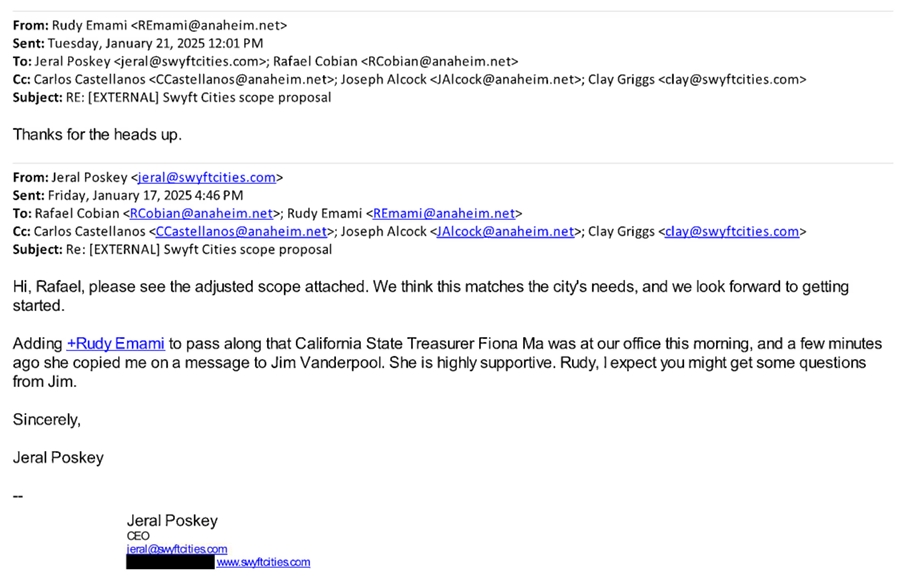
That email, sent by Jeral Poskey, founder and CEO of the firm, was directed to Rudy Emami, the city’s public works director, on January 17, 2025. In it, he said “that California State Treasurer Fiona Ma was at our office this morning, and a few minutes ago she copied me on a message to JimVanderpool. She is highly supportive. Rudy, I expect you might get some questions from Jim.”
Though the law does not prohibit an elected statewide officeholder like Ma from expressing support for a local project, the boundary between ordinary advocacy and improper influence becomes indistinct when that support is conveyed privately to city staff in ways that could shape government decisions outside established public channels and undermine public trust.
Jeral Poskey’s email mentioning Ma and Vanderpool on January 17, 2025.
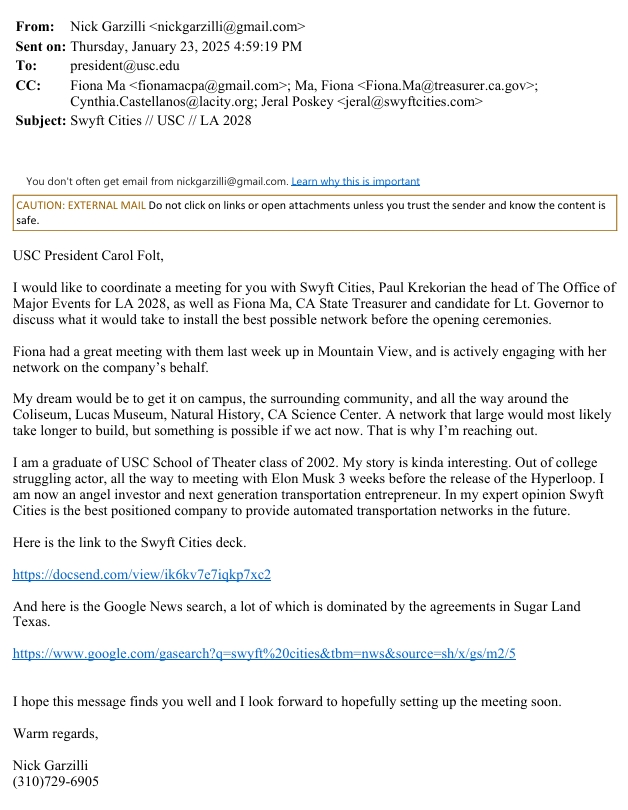
The meeting was arranged by Nick Garzilli, another key investor. Though it’s not clear if he was present, there may be a reason why he was chosen to set it up: he is an acquaintance of Ma.“I’ve known Fiona since 2012,” Garzilli boasted to an Irish film producer, “and recently she has been helping us meet the right people to build Swyft Cities. We are making some great progress.”
The Investigator filed public records act requests with the Anaheim city clerk and the state treasurer’s office asking for a copy of the email between Ma and Vanderpool that was sent to Poskey. But both agencies claimed that after “conducting a thorough and diligent search,” they couldn’t find it, asserting instead that there were simply no responsive records.
The reason? To discuss building an aerial gondola system that would travel from USC to Exposition Park and completing it before the opening ceremonies of the 2028 Summer Olympics. “My dream would be to get it on campus, the surrounding community, and all the way around the Coliseum, Lucas Museum, Natural History, CA Science Center…,” Garzilli said.
Perhaps in lieu of Krekorian’s absence, Garzilli contacted Los Angeles City Councilman Marqueece Harris‑Dawson and invited him to come to the meeting instead. Besides serving a district that borders USC and Exposition Park, the councilman is president of the city council and chair of the Ad Hoc Committee on the 2028 Summer Olympics and Paralympic Games.
It is not known if Councilman Harris-Dawson attended this function. The Investigator filed a public records act request with his office last month and is still waiting for a reply. A request is also pending with the Office of Exposition Park Management, an agency run by the state. The Office of Major Events responded by releasing a copy of the email they received from Garzilli.
Nick Garzilli’s email to then USC President Carol Folt on January 23, 2025.
It is the latter that Devon Mathis has expertise in. According to his LinkedIn biography, he is Director of Government and Public Relations for Origyn International, an energy company which provides and maintains public infrastructure for cities at absolutely no upfront cost. In return, they pay for it slowly through a long‑term service agreement rather than carrying debt.
“I want to introduce you to Devon Mathis of Origyn,” Poskey wrote in a March 31, 2025 email to Sean Crumby, then the city’s director of public works. He described Mathis as a former California state representative “recommended by Treasurer Fiona Ma” and said he wanted to meet “to show how they can finance the construction and operation of a [gondola] system like Whoosh …”
As noted earlier, Swyft Cities listed IBank as another potential source of funding. But it is not a private bank. It is a public one that issues bonds and provides low‑cost loans for infrastructure, climate, and economic development projects. It helps fund everything from water systems and public facilities to clean‑energy and community development initiatives.
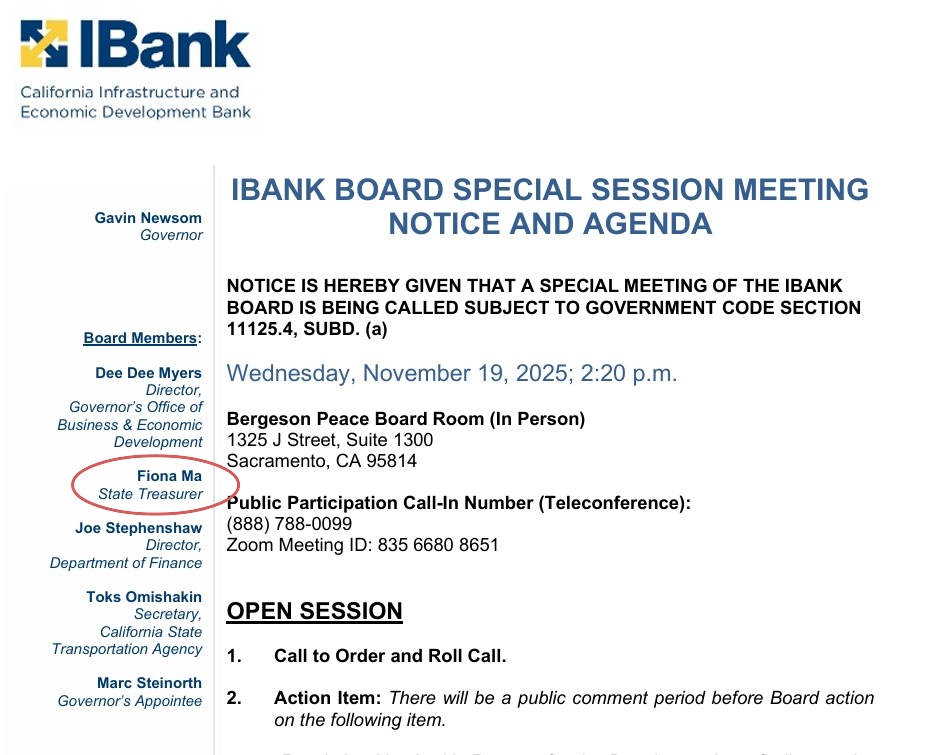
The IBank is housed in the Governor’s Office of Business and Economic Development (GO‑Biz). Four of the five board members are gubernatorial appointees—the GO‑Biz director, the director of finance, and two public members—and Ma serves on the board ex officio as an elected official with the power to help approve or deny loans for projects that come before it.
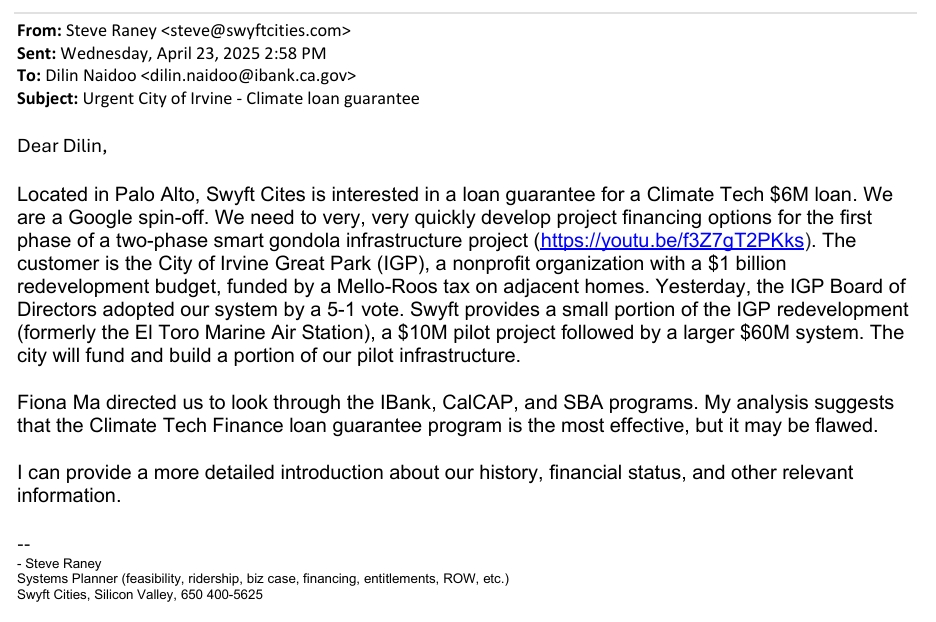
Emails that The Investigator obtained from IBank under the public records act show Swyft Citieswas in direct communication with their staff to learn more about what financing options were available to them. “Fiona Ma directed us to look through the IBank, CalCAP, and SBA programs,” Steve Raney, a Systems Planner, told a senior loan officer in a message dated April 23, 2025.
“Swyft Cities is interested in a loan guarantee … We need to very, very quickly develop project financing options for the first phase of a two-phase smart gondola infrastructure project,” he said. “The customer is the City of Irvine Great Park (IGP), a nonprofit organization with a $1 billion redevelopment budget, funded by a Mello-Roos tax on adjacent homes.”
The Irvine Great Park Board had just voted 5–1 the previous day to enter negotiations with Swyft Cities on a proposed aerial gondola system, but the approval came with some conditions. The firm had to prove it could deliver a $10 million pilot project with no public funds and demonstrate it had the financing and operational capacity to make the system fully viable.
Raney informed the loan officer he believed “that the Climate Tech Finance loan guarantee program is the most effective,” for his firm,”but it may be flawed.” IBank staff responded by putting him in touch with the Bay Area Air District (BAAD), a public agency which does much more than just regulate stationary sources of air pollution across the San Francisco Bay Area.
Steve Raney’s email to an IBank loan officer on April 23, 2025.
BAAD plays a little known, but specialized, operational role with the IBank through a joint program called Climate Tech Finance. Established in 2018 to accelerate the development of new and innovative technologies that reduce greenhouse gases, a team at this agency essentially prepares, vets, and funnels eligible applicants directly into their financing pipeline.
Once an applicant qualifies, the IBank then provides a government‑backed loan guarantee that reduces lender risk and unlocks financing for early‑stage climate‑tech firms. By promising to cover most losses if a borrower defaults on their payments, the state makes private financial institutions willing to fund companies that they would otherwise reject as too risky.
Emails released to The Investigator by BAAD show that Swyft Cities sought a quote for a $2 million loan guarantee in December 2024 but didn’t follow through with the required paperwork to start the application process. However, they started again shortly after the Irvine Great Park Board voted in favor of entering into negotiations with them to build one of their systems.
However, Swyft Cities didn’t get the cash. Monthly activity reports written by a private consultant retained by BAAD show their request proceeded very slowly. Though the firm had chosen Gondola Ventures, a “hybrid venture and private equity firm” based in Washington, as their preferred lender, the agency spent months trying to arrange a meeting to determine eligibility.
“We are [still] attempting to set up a meeting to evaluate the lender (Gondola Ventures) which has expressed strong interest in them,” the consultant wrote in an August 2025 activity report. “We are reviewing the possibility of certifying them as a nonbank lender for the Swyft Cities project.” Then he cryptically added: “The IBank leadership knows Gondola Ventures.“
Ma listed as a board member of IBank on a meeting agenda.
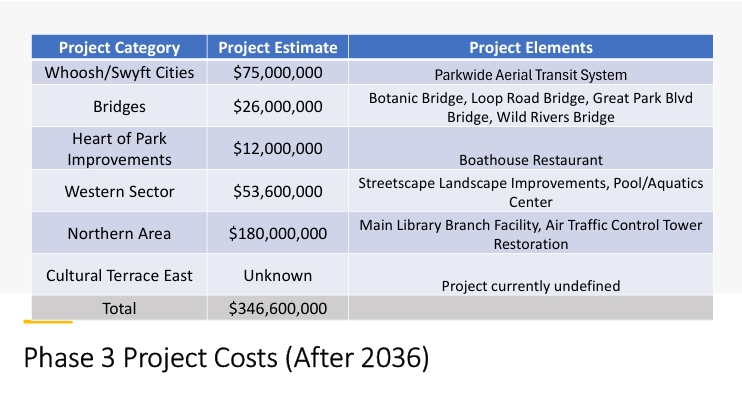
The city had now decided that aerial gondolas wouldn’t be needed until “Phase 3” of the plan, which is slated to go into effect in 2036–almost a decade away. That shift stripped away any sense of urgency for Swyft Cities to deliver a pilot project by December 2026; it also meant the firm could no longer justify seeking a government-backed loan guarantee from IBank.
Miranda Iglesias, a spokeswoman for BAAD, told The Investigator via email last Friday that though the firm had “shown interest in the Climate Tech Finance Program … they have not submitted an application.” She further added that “staff were unable to connect with Gondola Ventures and they are no longer an active priority to certify as a non-bank lender …”
And despite the fact the City of Anaheim partnered with Swyft Cities to explore the possibility of using aerial gondolas to connect entertainment venues, no commitment has been made. A source at city hall, who knew nothing about this investigation, expressed skepticism saying it’s a high‑exposure undertaking since the firm had never delivered an operational system.
Perhaps an unintended consequence of the Great Park’s decision to delay Swyft Cities system is that Ma will no longer be in a position to vote on any other government-backed loan guarantees they might seek. Besides the fact she is running for Lt. Governor, her term is up at the end of this year, which means she won’t be serving on the IBank board for that much longer.
From a September 9, 2025 update released by the City of Irvine.
The Investigator made a good faith effort to reach out to Ma not only to seek her comments about the January 17th email, but her relationships with Vanderpool and Swyft Cities. But neither she, nor anybody at the state treasurer’s press office, who we copied our messages to, responded to any of our inquiries. Similar questions sent out to Vanderpool and Poskey went unanswered.
Regardless, the records show a pattern in which Ma’s personal network intersected with Swyft Cities’ efforts to secure government backing of their projects. These interactions were not disclosed publicly. Instead, they occurred very quietly, behind closed doors, raising concerns about whether the state treasurer inappropriately exercised her power on behalf of a private company.
The absence of the email Ma allegedly sent to Vanderpool is troubling. Its disappearance contradicts a message from the person it was copied to, suggesting either a failure to preserve official correspondence or a deliberate omission. Either scenario raises red flags about record keeping practices and whether politically sensitive information is being shielded from disclosure.
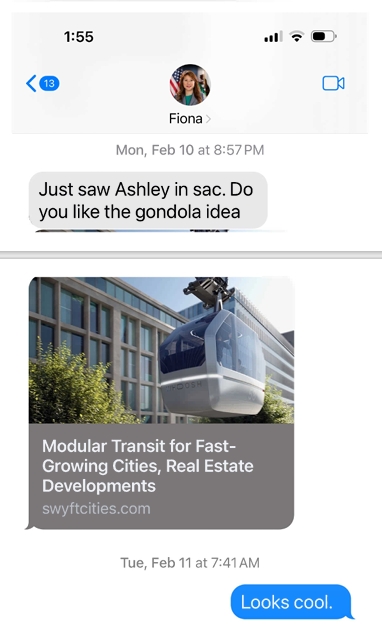
It should be emphasized The Investigator has evidence the state treasurer violated the law. In public records act requests we submitted, we asked for all communications exchanged between Ma and Vanderpool. Her office withheld numerous text messages from us–which is illegal. We ultimately secured many of them, but only through separate requests made to the City of Anaheim.
By steering attention toward IBank as a potential source of financing, Swyft Cities inadvertently cast a sharper light on Ma’s actions. As a board member, her discreet engagement with the firm invites questions about whose interests were being served. Public financing institutions require distance, yet her interactions hint at a level of closeness that challenges that expectation.
The Investigator will continue looking into this matter since questions it raises go far beyond any single company. Californians rely on elected statewide officeholders to uphold ethical standards that ensure decisions are made in the public interest. Whether Ma met that obligation remains unresolved, but the evidence uncovered so far warrants sustained scrutiny and public vigilance.
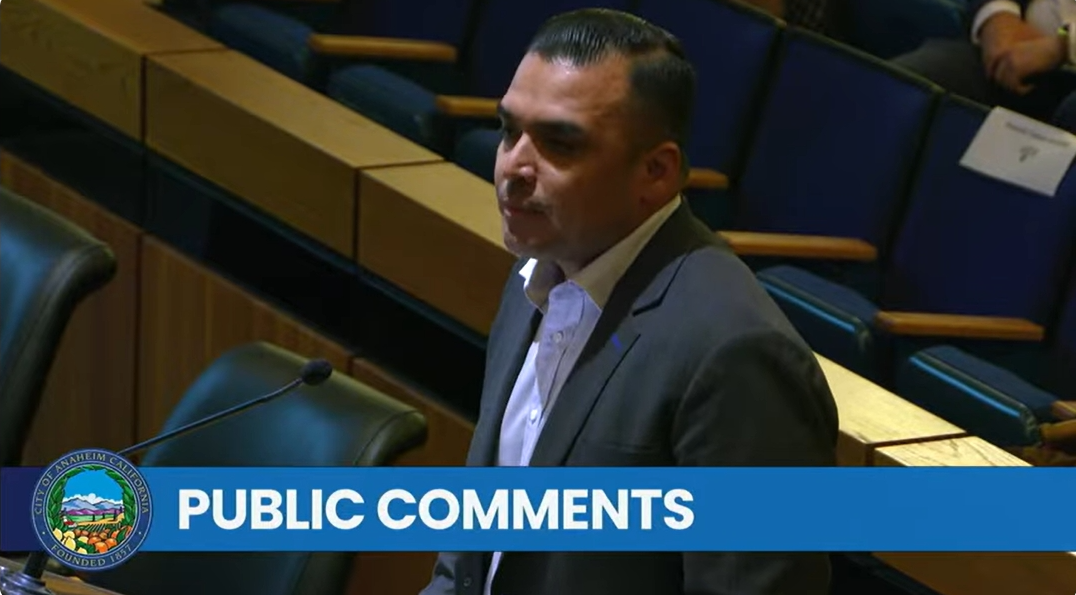
Jose Duran, president of the Anaheim Police Association, speaks in favor of a “gate tax” on Disney theme park admissions during public comments.
By DUANE J. ROBERTS Editor & Publisher
On Tuesday, October 28th, the Anaheim City Council rejected a push by the Anaheim Police Association—the union representing 400 sworn personnel employed by the city’s police department—to place a measure on the ballot that would impose a “gate tax” on Disney theme park admissions.
Despite a parade of police union leaders speaking out in favor of the measure during public comments, proponent Councilwoman Natalie Rubalcava, whose political campaigns have been heavily funded by law enforcement, was forced to acknowledge that it was “dead on arrival” after a lengthy debate.
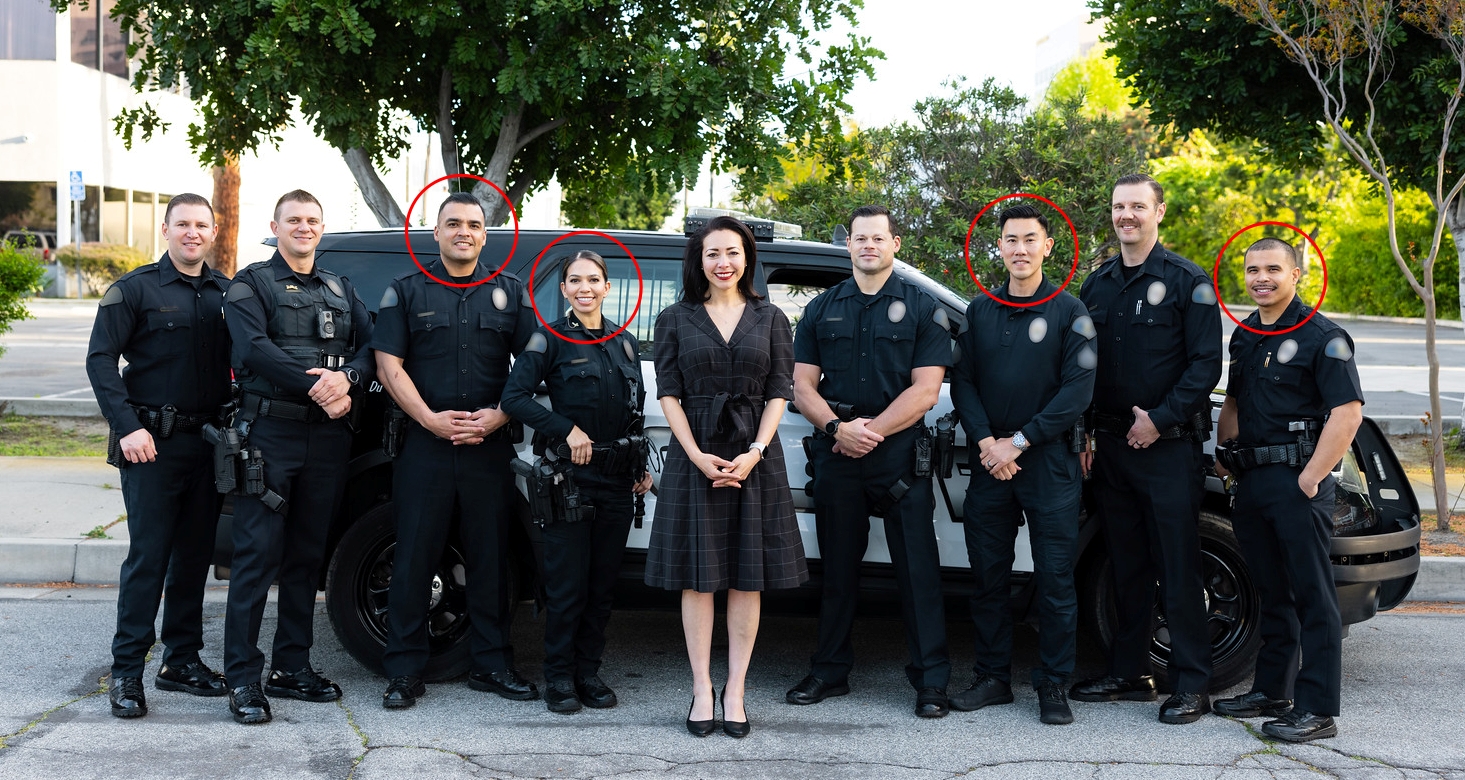
In addition to Gaby Sutter, the Anaheim Police Association’s executive director, others from that organization who addressed the council included Jose Duran, the president, Tony Lee, its vice president, and Cesar Aguilar and Breana Castro, members of their political action committee board.
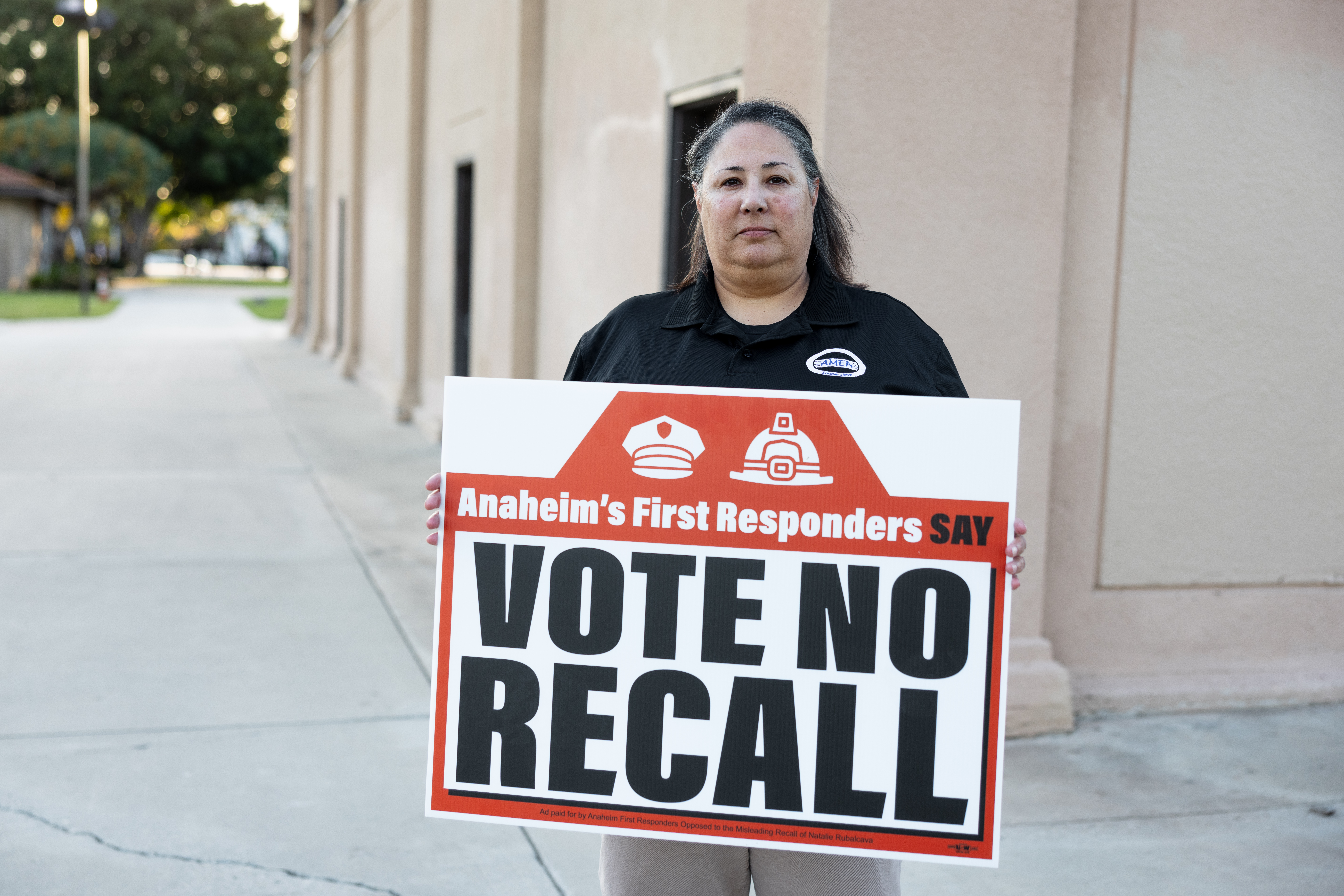
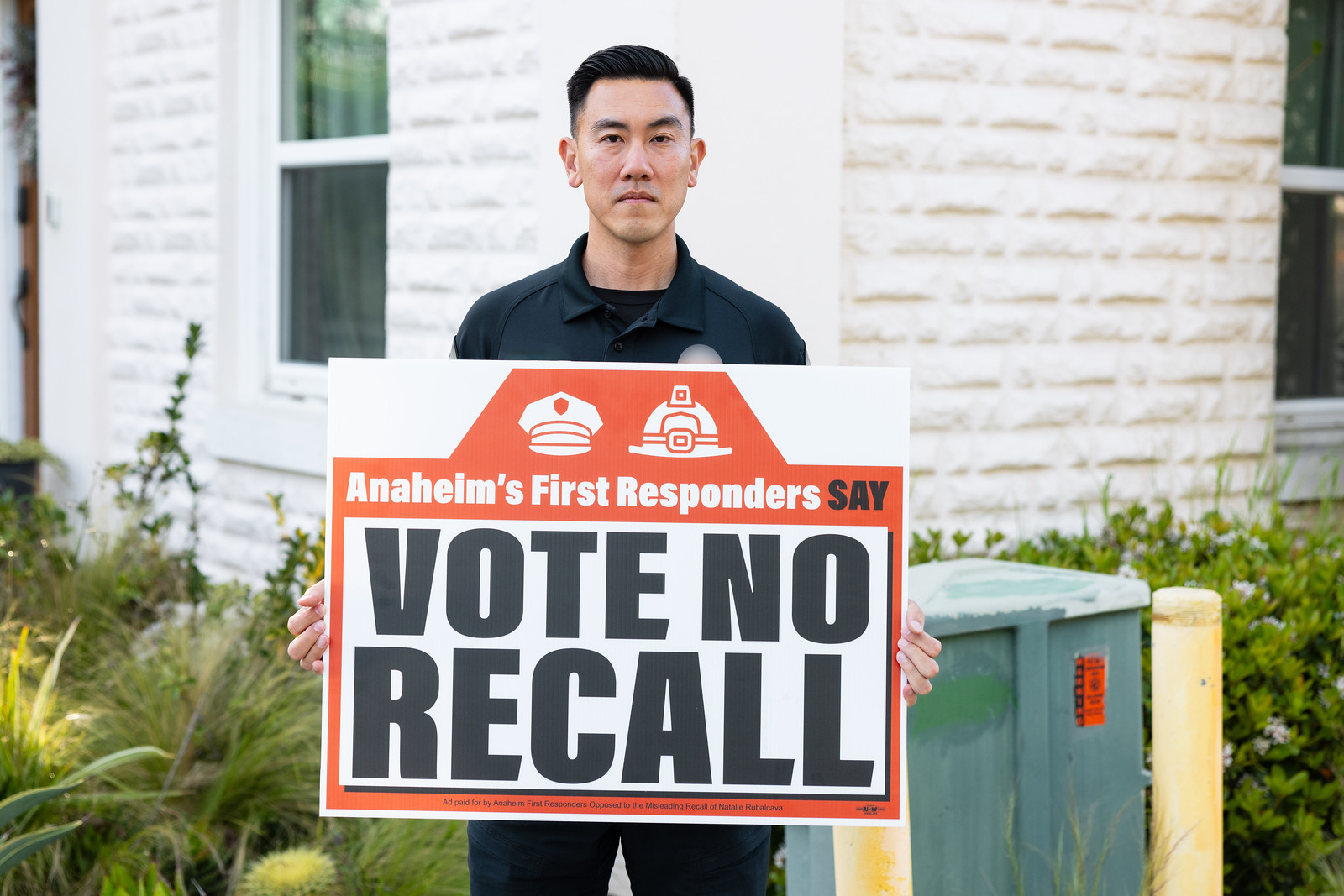
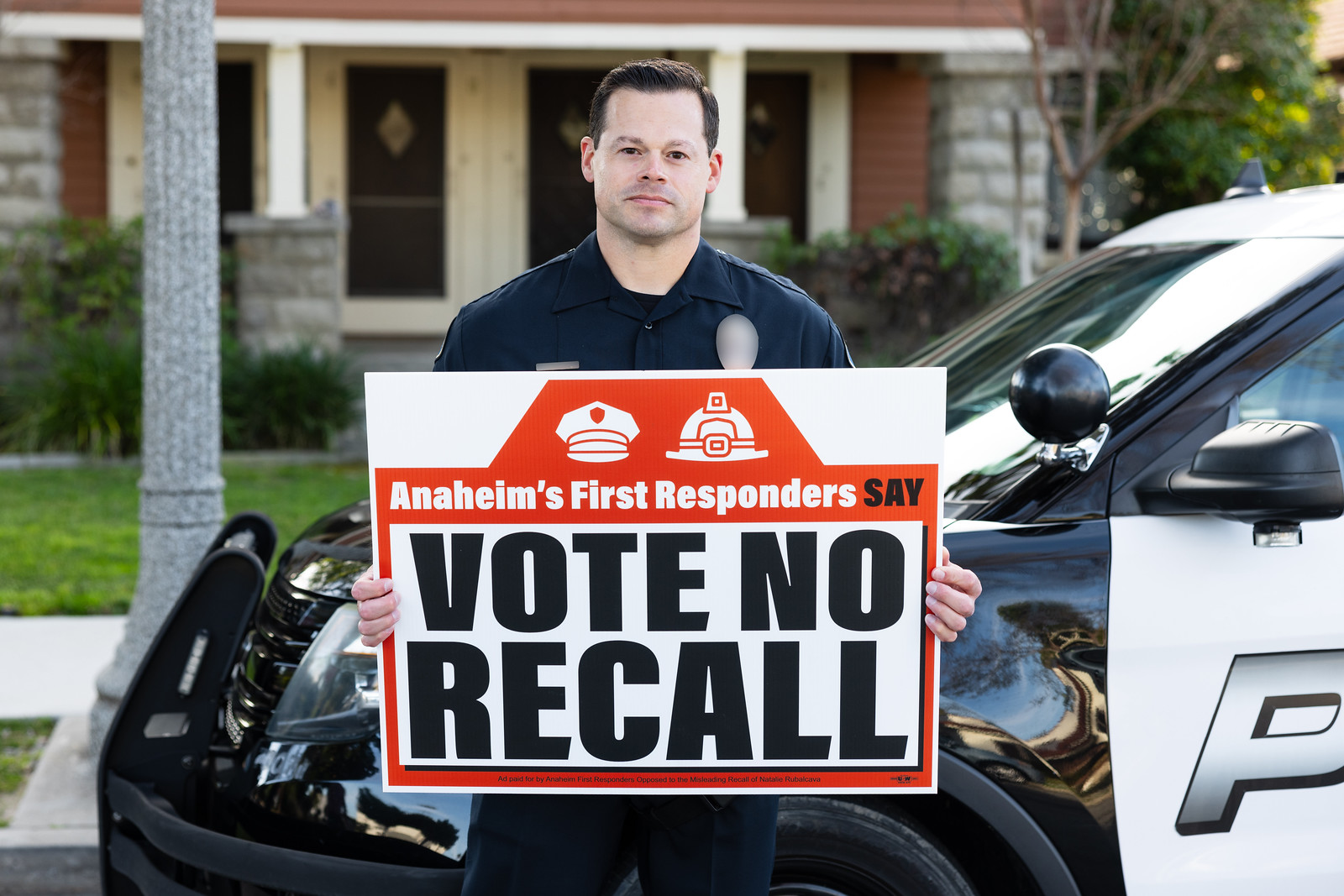
Photos obtained by The Anaheim Investigator that were used in last year’s campaign opposing Rubalcava’s recall show Duran, Lee, Aguilar, Castro, and other police union leaders posing with the councilwoman; many also hold signs with the words, “Anaheim’s First Responders Say Vote No Recall.”
Rubalcava with police union leaders (circled in red) who spoke at the meeting.
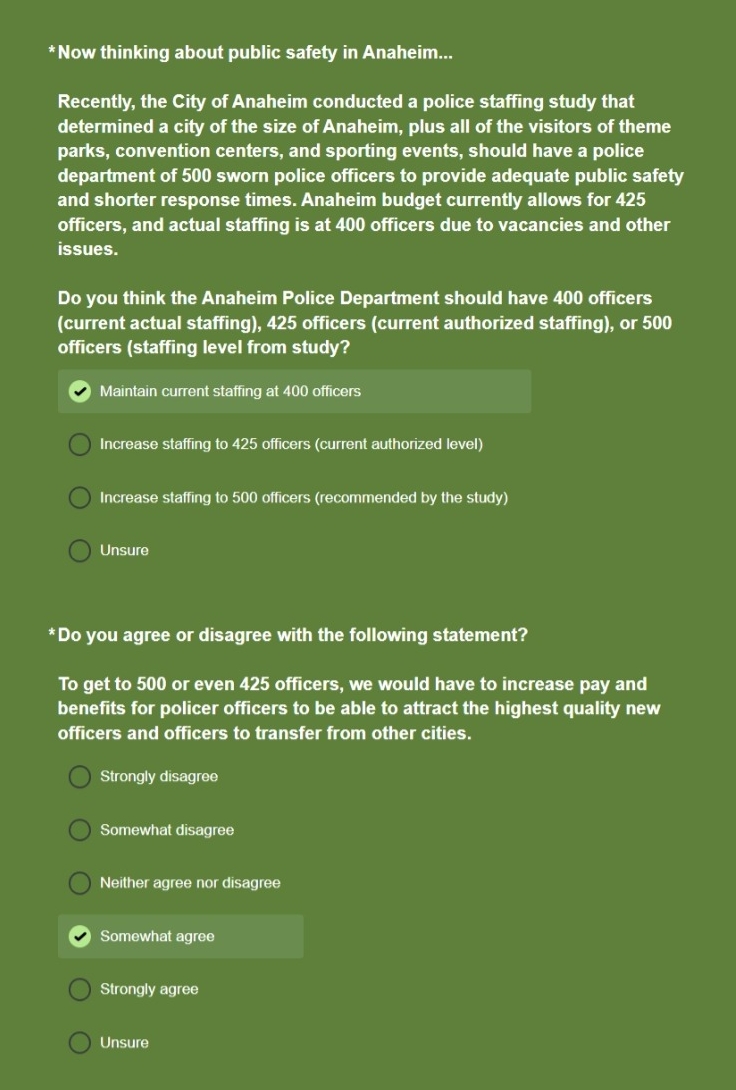
Like most surveys, it reflected the needs and priorities of those who funded it, and a number of questions used wording which favored positions aligned with the police union, such as repeated items about expanding Anaheim Police Departmentstaffing levels and boosting pay and benefits of officers.
In a brief conversation, Rubalcava denied being privy to any details of their survey before requesting that an item about the “gate tax” be placed on a future city council meeting agenda. However, she admitted that they, along with another union, were part of an “emerging coalition” supportive of it.
But this issue is far from settled. Although the city council opted not to put the measure on the ballot at this time, members voted 5–2 to continue the item so it can be included in a wider review of revenues, the budget cycle, and prospective city projects. A date for that discussion has not yet been set.
Campaign photo of Natalie Rubalcava with Jose Duran (second left), president of the Anaheim Police Association, and three of their board members (right).
By DUANE J. ROBERTS Editor & Publisher
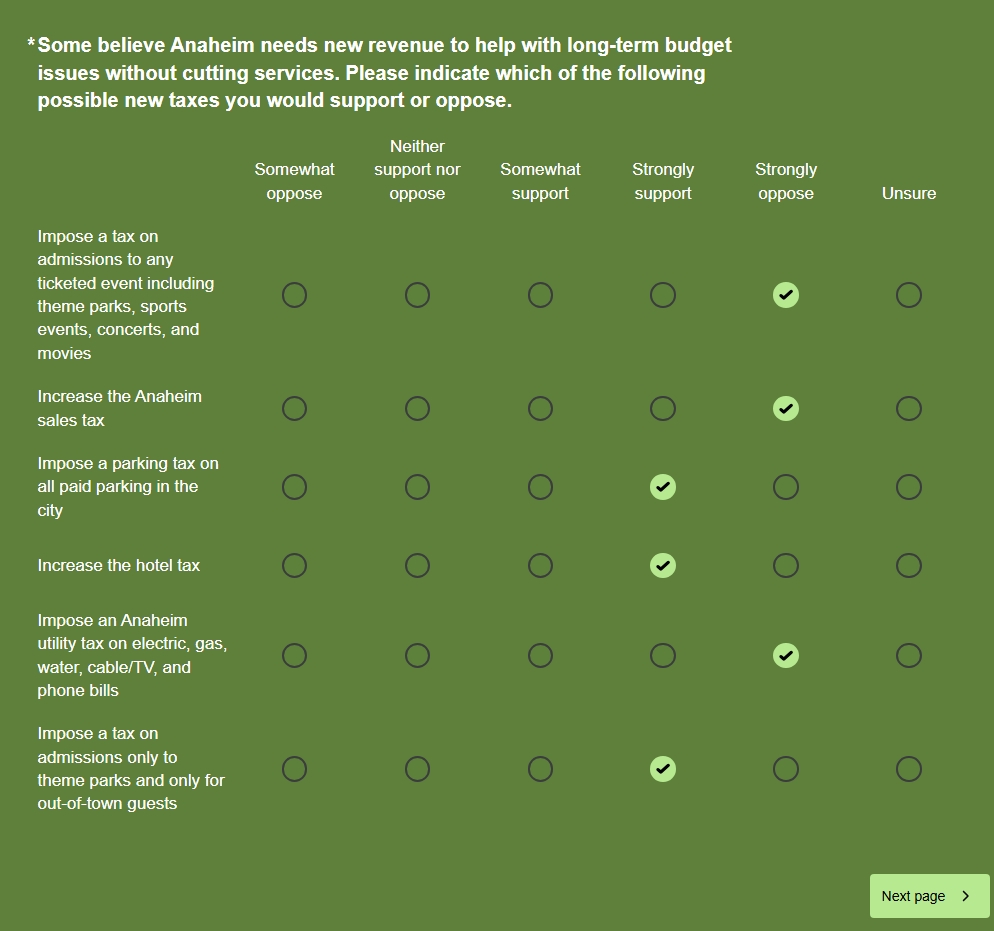
The Anaheim Police Association—the union representing 400 sworn personnel employed by the city’s police department—commissioned a survey in mid-August asking residents if they supported “new taxes” on Disney theme park admissions providing the revenue would “help with long-term budget issues without cutting services.”
The survey in question, of which a link was texted directly to the smartphones of individuals that The Anaheim Investigator characterizes as being “high propensity voters,” was conducted through Qualtrics, a platform frequently used by political strategists to gauge public opinion on candidates, issues, or ballot measures in real-time.
Although the Anaheim Police Association has not yet publicly endorsed a “gate tax,” evidence indicates they, along with the Anaheim Municipal Employees Association, are part of an “emerging coalition” supportive of it–something proponent Councilwoman Natalie Rubalcava acknowledged in a brief conversation earlier this month.
Screenshot of completed survey questions on new taxes.
Like most surveys, this one was designed to reflect the needs, wants, and priorities of those who funded it, and a number of questions used wording that favored positions aligned with the police union, such as repeated items about expanding Anaheim Police Departmentstaffing levels and boosting the pay and benefits of officers.
Moreover, some questions exposed matters hidden from public view, such as an ongoing dispute with The Walt Disney Company over how cops assigned to patrol their theme parks do their job: “If there is a disagreement over how these officers should enforce the law and public safety at Disney, who should make the decision?”
Respondents were also asked to weigh in on other important issues, including whether or not they believed Disneyland wields “too much influence at city hall,” how millions in surplus funds freed up by paying off infrastructure bonds needs to be spent, and if our police force should “cooperate with federal immigration officials.”
Screenshot of completed survey questions on police staffing.
Because the survey was most likely completed before Councilwoman Rubalcava officially requested the item of a “gate tax” be placed on the agenda of the September 23rd city council meeting, The Investigator approached her to inquire if the police union shared the results with her. She denied being privy to any details.
However, when Rubalcava was asked separately about a message about the “gate tax” she posted to her Instagram account on September 19th and shared with both the Anaheim Police Association and Anaheim Municipal Employees Association, she admitted they were part of an “emerging coalition” that was supportive of it.
The Anaheim Municipal Employees Association has also heavily backed Rubalcava and represents non-sworn personnel at the Anaheim Police Department. Jonnae Barreras, its president, is a senior police analyst who earned $135,953 in pay and benefits last year. Two other members of their board work for the department as well.
It should be noted that Barreras and other top leaders of the Anaheim Police Association are in multiple photos obtained by The Investigator that were used in the campaign to defeat Rubalcava’s recall. Several of them, including her, can be seen holding up signs emblazoned with the words “Anaheim’s First Responders Say Vote No Recall.”
Jonnae Barreras, President, Anaheim Municipal Employees Association.
Tony Lee, Vice-President, Anaheim Police Association.
Steven Dahl, Secretary, Anaheim Police Association.
Michael Fleet, Treasurer, Anaheim Police Association.
For the record, The Investigator made at least three attempts via email to contact Duran and Barreras to ask them about matters that were touched upon in this article. But neither has bothered to respond to our inquiries. Rubalcava–who actually invited us to send her follow-up questions–has not replied to any of our messages either.
Concept image of what a gondola stop at Anaheim GardenWalk, located on the northside of Katella Avenue, might look like.
By DUANE J. ROBERTS Editor & Publisher
Internal emails, contracts, and PowerPoint presentations obtained by The Anaheim Investigator through the public records act reveal city planners are exploring the option of constructing an aerial gondola system to connect the Platinum Triangle with the Anaheim Resort in preparation for the 2028 Summer Olympics in Los Angeles.
While the final route has yet to be decided, there seems to be interest in an alignment running east-west along Katella Avenue featuring six stops. At Harbor Boulevard, the line would split into two branches, each ending near the eastern entrances of Disneyland, California Adventure theme parks and the Anaheim Convention Center.
The Katella Avenue route for the proposed gondola system.
Emails reviewed by The Investigator show Jeral Poskey, CEO of Swyft Cities, and Clay Griggs, one of the firm’s co-founders, have already discussed their gondola concept with “key stakeholders” such as The Walt Disney Company and OCVibe, a $4-billion mixed-use district being developed on 100-acres of land surrounding the Honda Center.
In a March 5th message Griggssent out to several city planners working with him on this matter, he emphatically boasted that “our meeting earlier with OCVibe went very well,” hinting they were quite supportive of it. “They will be sending over plans for the parking garage; they are currently envisioning our maintenance facility on the top floor.”
Indeed, a floor plan created by OCVibe and reproduced in a PowerPoint slide demonstrates their commitment to Swyft Cities isn’t just limited to offering space for a “maintenance facility,” but a control center, charging bays, and even a boarding station–all within walking distance of the Anaheim Regional Transportation Intermodal Center.
OCVibe floor plan for a gondola maintenance facility.
Concept image of gondolas next to OCVibe parking garage.
During initial talks with Swyft Cities, city planners were told that towers erected to hold the gondola cables in place could be specially customized to resemble the Los Angeles Angels’ iconic “Big A” logo—an idea which taps into Anaheim’s distinct character as being the only city in Orange County that hosts a major league baseball team.
Two design renderings the firm created not only contrast the scale and form of an imagined “Angels” tower with a “standard single” tower but also provide a birds-eye glimpse of how it might actually appear in real life facing west on Katella Avenue toward the Anaheim Convention Center and California Adventure theme park.
However, building a gondola system along Katella Avenue might be problematic. As Poskey himself acknowledged in an email, there are “palm trees”–literally hundreds of them. Many would have to be removed to make way for the towers, and it is not inconceivable that could generate opposition from both residents and hoteliers alike.
“Angels” tower vs. “Standard Single” tower.
Concept image for a gondola system using “Angels” towers.
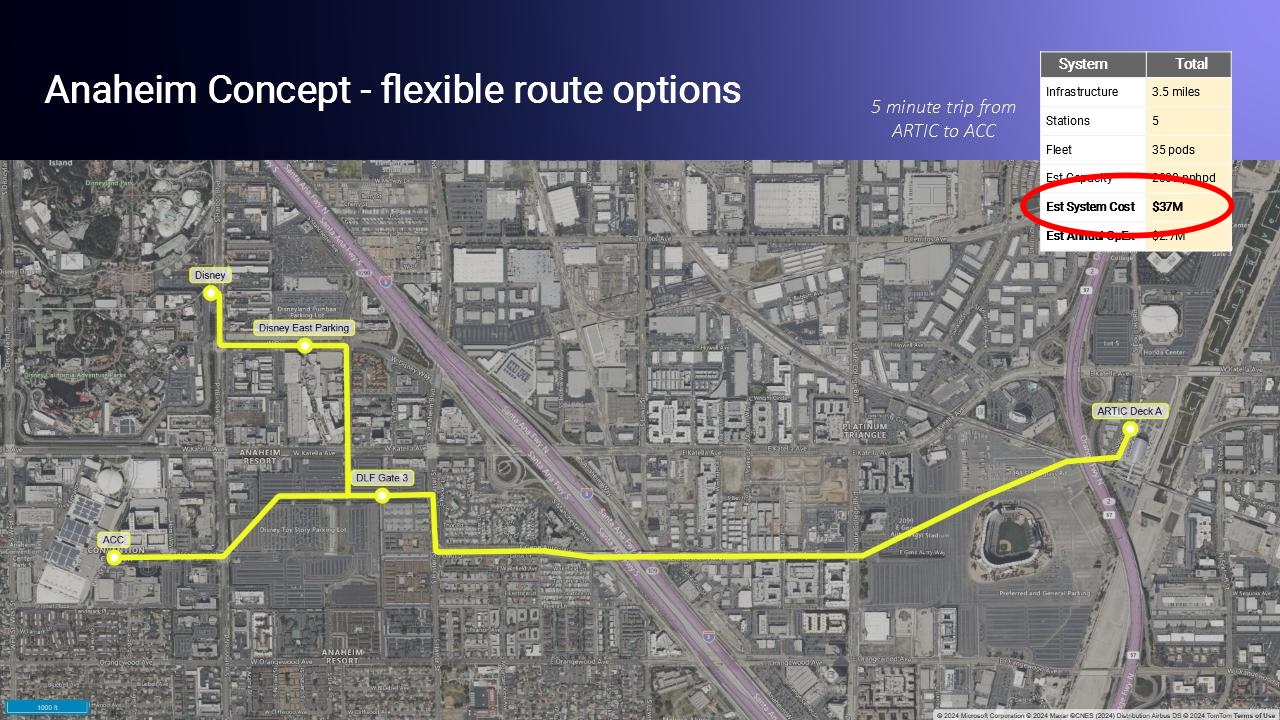
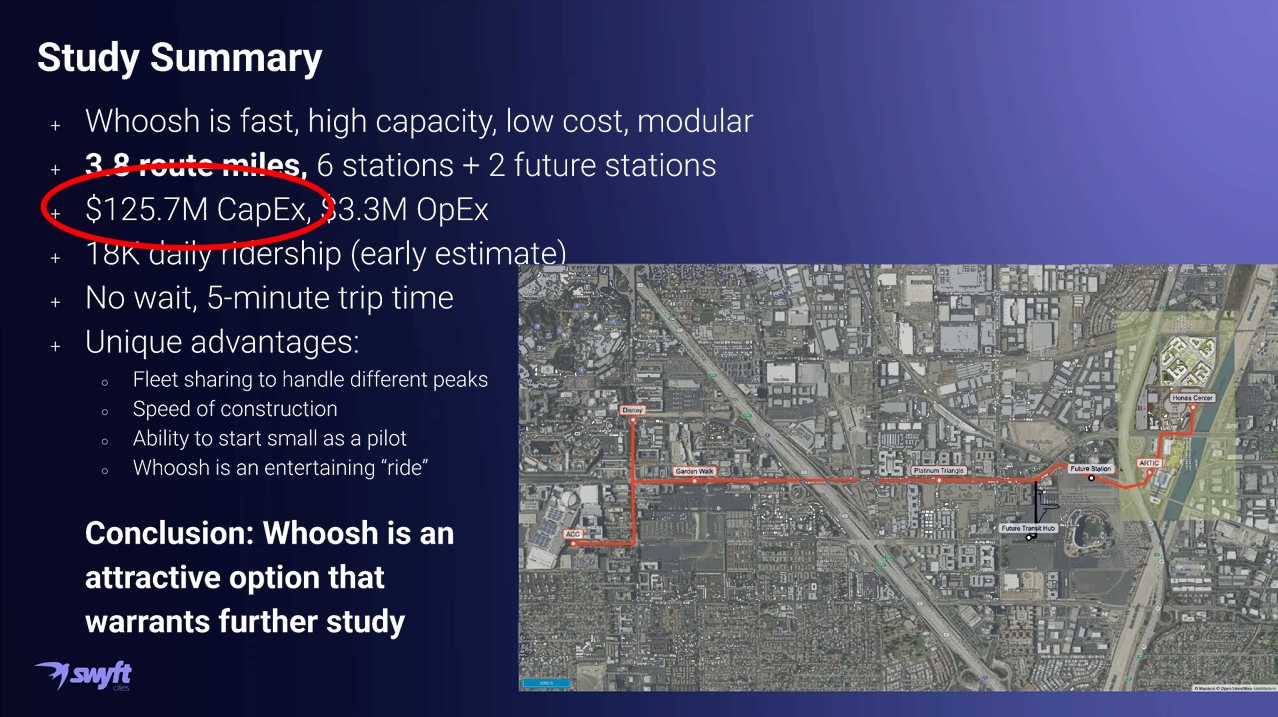
Last December, Swyft Citiesshared a PowerPoint presentation indicating that their gondola system—comprising of a fleet of around 35 “pods”—could be implemented at an estimated cost of roughly $33 to $37 million. This equated to just under $11 million per mile, subject to variation based on final design and alignment considerations.
Estimated cost for a 3.5-mile route last December: $37 million.
Estimated cost for a 3.8-mile route in July: $125.7 million.
As of today, no source of funds has been identified to pay for this system. However, one slide included in the July PowerPoint presentation says that financing could come from public-private partnerships, grants, and the California Infrastructure & Economic Development Bank, a public entity owned and operated by the state.
Emails reveal city planners here reached out to their Irvine counterparts to learn more about it. “I wanted to check in to see if you have cost estimates or any other useful information to share in your due diligence on Swyft Cities,” wrote Rudy Emami, public works director, in a March 11th message to Sean Crumby, who held a similar job in that town.
Email inquiry about the gondola project in Irvine.
While “key stakeholders” like OCVibe have quietly expressed enthusiasm for the gondola system, its implementation is not a foregone conclusion. Because Swyft Cities has never delivered a fully operational system, there are concerns about its ability to fulfill its promises–putting taxpayer money at risk of significant cost overruns and system failure.
Mike Lyster, the city’s chief communications officer, told The Investigator that gondolas aren’t the only option being explored to connect the Platinum Triangle and Anaheim Resort: “We continue to look at transportation technology from a half-dozen or more different providers. It would be incorrect to suggest we’re focused on a single one.”
“In the months ahead, we could issue a potential request for information from many different types of transit tech companies out there, including gondola, trackless, autonomous, trams and others,” Lyster added. “We may need a consultant to help with this process … But nothing has been decided, and nothing is scheduled at this point.”
Will you make a small $5 gift today? Your contribution will allow The Anaheim Investigator to keep delivering hard-hitting investigative journalism that’s open for everyone to see! Nobody covers Anaheim City Hall like like we do. That's why your support is so important to us!